September 7, 2026
8 Options for What Color Countertops Go with White Cabinets

You've just refinished your white cabinets, and now the countertop samples are making the kitchen feel harder, not easier, to finish. A slab that looked right in an Austin showroom can read too yellow in Lakeway daylight, too gray under cool lighting in Round Rock, or too heavy beside bright white cabinets in Bee Cave. The right answer to what color countertops go with white cabinets depends on undertone, finish, natural light, flooring, backsplash, and how much maintenance you'll accept.
White cabinets stay flexible for a reason. Houzz's 2024 Kitchen Trends Study found that 46% of renovating homeowners chose white cabinets, while 43% selected white countertops and 52% chose white for upper cabinets. The same study also showed that more than a quarter of homeowners now use different colors for the main and island countertops. For Austin-area projects, that opens the door to contrast, warmth, texture, or color without fighting the cabinet finish.
Below are eight practical countertop directions, with examples from Round Rock, Leander, Cedar Park, Lakeway, Dripping Springs, and Austin.
Table of Contents
- 1. Classic Gray Quartz Countertops with White Cabinets
- 2. Warm Beige and Cream Granite Countertops
- 3. Sleek Black or Dark Charcoal Countertops
- 4. Soft White and Cream Marble Countertops
- 5. Warm Butcher Block or Wood Countertops
- 6. Soft Blue or Blue-Gray Countertops
- 7. Copper, Bronze, or Metallic Accent Countertops
- 8. Warm Terracotta, Rust, or Earth-Tone Countertops
- 8 Countertop Color Options for White Cabinets
- Bringing Your Kitchen Vision to Life
1. Classic Gray Quartz Countertops with White Cabinets
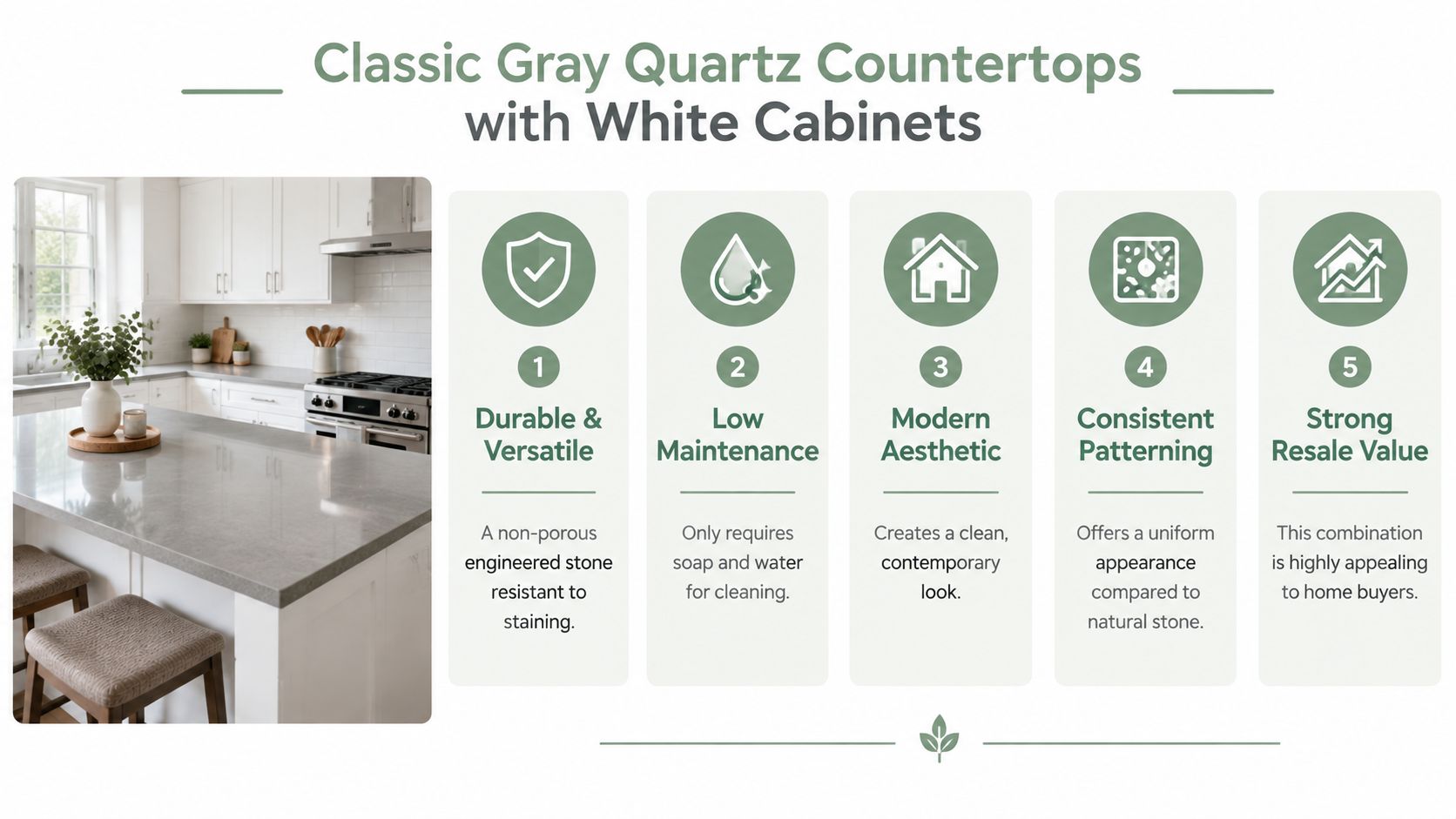
Gray quartz is one of the easiest pairings for white cabinetry because it adds definition without taking away the kitchen's brightness. In a modern Kyle build, light gray quartz with bright painted cabinets creates a clean, open backdrop. In a Georgetown heritage home, a softer gray can update refinished cabinetry while respecting the home's older character. A Dripping Springs ranch kitchen can take the same idea in a deeper charcoal slab beside crisp farmhouse doors.
The material also suits busy households. Quartz offers a consistent pattern and a nonporous surface, so homeowners can focus on selecting the right gray rather than managing the variation found in every natural-stone slab. Before choosing, compare several samples in the actual room. Gray can shift noticeably between Driftwood's strong natural light and the more controlled interior lighting common in Georgetown homes.
Make gray feel warmer
A cool gray countertop beside cool white cabinets can look polished, but it may feel sterile if the rest of the room lacks warmth. Brushed gold or copper hardware, a wood island base, and warm flooring help balance the palette. Mid-tone gray quartz is also a practical choice for Steiner Ranch new construction, where builder-white cabinets can otherwise look visually unfinished.
- Choose subtle movement: Fine veining adds interest without competing with the cabinet doors.
- Coordinate the backsplash: Gray grout can connect the counter and tile, but keep the tile pattern quiet if the slab already has movement.
- Test undertones: Hold a bright white sheet of paper beside the cabinet. A creamy cabinet may need greige-gray rather than blue-gray quartz.
Practical rule: Gray should support the white cabinetry, not become a second competing focal point.
For a closer look at material differences before you compare slabs, use this guide to choosing countertop materials.
2. Warm Beige and Cream Granite Countertops
Warm beige and cream granite brings a grounded, natural quality to white cabinets. The combination works especially well in Buda, Dripping Springs, and Georgetown, where many homes blend traditional Texas materials with updated cabinetry. Venetian Gold, Giallo Ornamental, and Colonial Gold can introduce honey, cream, and soft brown movement while keeping the room brighter than a fully dark countertop would.
A Lakeway estate kitchen might use Venetian Gold with custom white refinishing for a formal, established look. In a historic West Lake Hills home, Giallo Ornamental can preserve the visual connection to the original architecture while fresh white cabinets make the room feel cleaner. Bee Cave renovations often take the look in a more polished direction, pairing cream granite with refined cabinet hardware and a restrained backsplash.
Let the slab determine the supporting colors
Granite varies from slab to slab, so don't approve a small showroom chip and assume it represents the full installation. Ask to see the actual slab, or at least a large sample, beside a cabinet door, backsplash tile, flooring, and hardware. Gold or honey veining usually looks more intentional when the room includes another warm element, such as wood flooring or bronze lighting.
Maintenance also deserves a clear conversation with the fabricator. Ask how often the selected granite should be sealed, and follow the supplier's recommendation. Use cutting boards and trivets even when the stone is durable, because hot pans and knife work can damage the finish or your tools.
An undermount sink keeps the transition between counter and sink cleaner and makes it easier to wipe crumbs directly into the basin. Warm grout and backsplash materials, similar to the palettes often specified in Steiner Ranch and Hutto builder kitchens, can keep cream granite from looking isolated.
The trade-off is visual commitment. Warm granite can make a kitchen feel welcoming, but a strongly patterned slab may limit later changes to flooring, paint, and hardware. Choose a calmer pattern if you want the white cabinets to remain the long-term star.
3. Sleek Black or Dark Charcoal Countertops
Black and dark charcoal countertops create the strongest contrast in this list. They sharpen white cabinetry, define the work surface, and give a kitchen a more architectural appearance. A contemporary Austin renovation with honed black granite and crisp refinished cabinets can feel refined rather than stark. In Pflugerville, black quartz with matte white doors and chrome hardware creates a modern contrast that suits a newer home.
The same strategy works in Leander new construction, where dark charcoal quartz can give bright transitional cabinetry more depth. In a Georgetown renovation, black soapstone can connect traditional white cabinet restoration to a more current material palette.
Control the drama with finish and lighting
Polished black surfaces reflect more light and can show water marks, fingerprints, and glare. A honed finish generally creates a softer visual effect and is often easier to live with in a high-use kitchen. Dark counters also need good task lighting. Warm lighting around 3000K can keep the room from feeling dim, while under-cabinet lights brighten the work zone and add definition beneath the upper cabinets.
- Lighten the wall area: White subway tile or a pale backsplash keeps the contrast from becoming visually heavy.
- Add surface variation: Subtle veining prevents a large island from reading as one flat block.
- Use dark strategically: A black island or peninsula can act as the focal point while lighter perimeter counters keep the room balanced.
- Repeat the finish carefully: Brushed nickel, matte black, or restrained chrome hardware can support the contemporary direction.
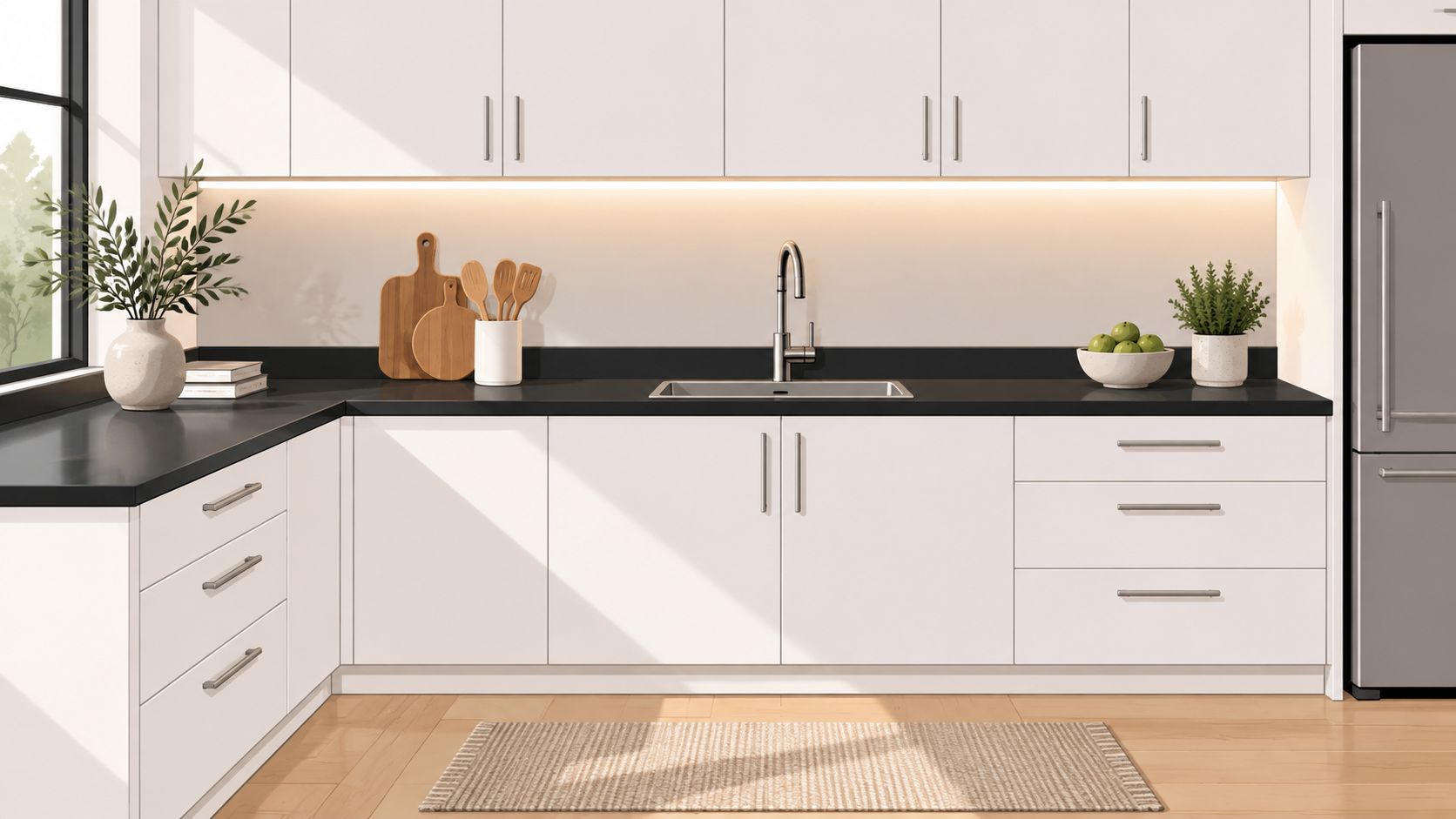
Dark counters work best when the kitchen has enough daylight or layered lighting. Before you commit, place a large sample beside the cabinet and backsplash at morning, afternoon, and evening. For layout, sequencing, and finish coordination, review this resource on planning a kitchen renovation.
4. Soft White and Cream Marble Countertops
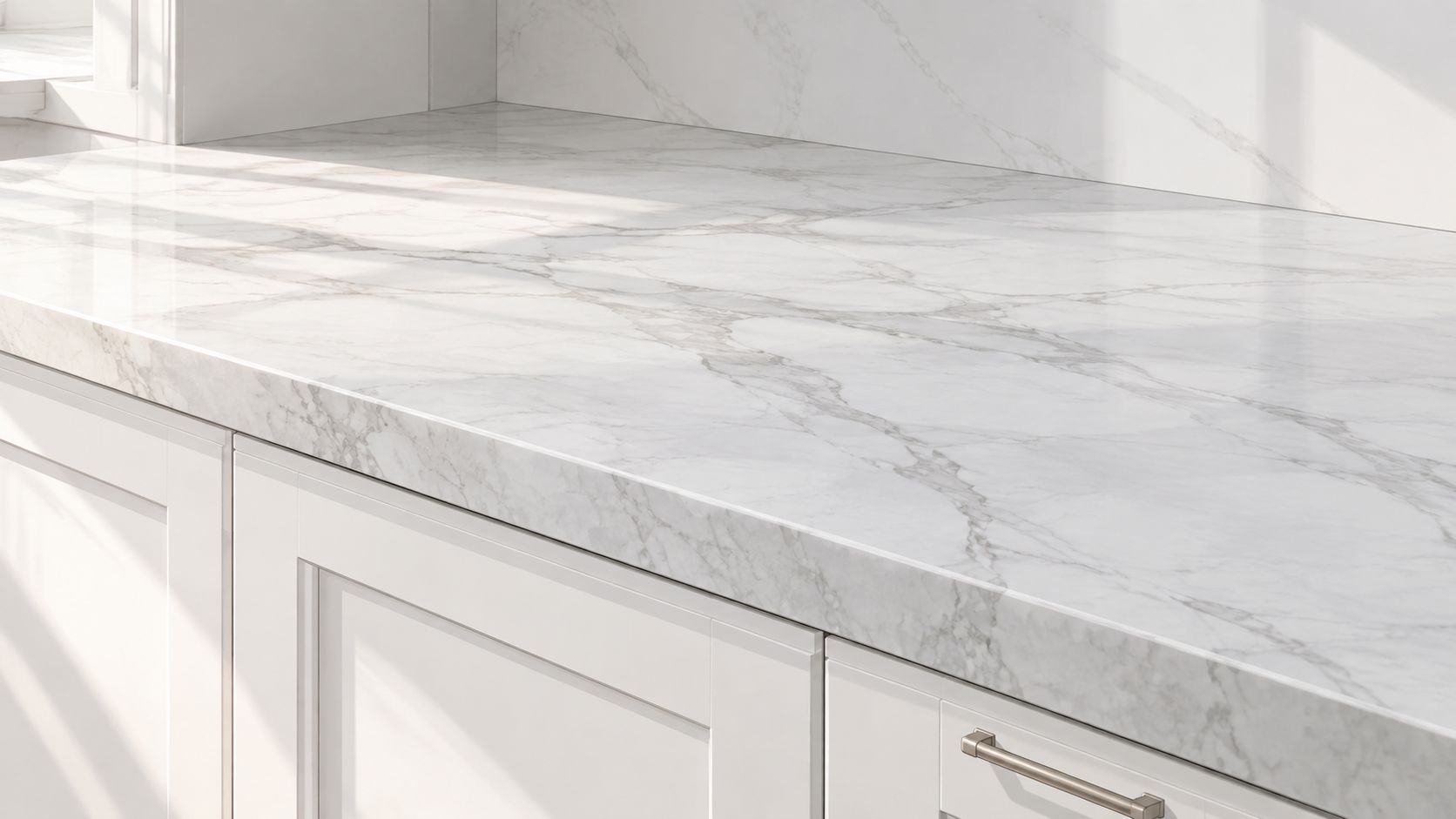
Soft white or cream marble creates a refined, nearly monochromatic kitchen with white cabinets. Carrara marble tends to offer quieter gray movement, while Calacatta and Statuario can provide more visible veining and a stronger focal point. In a Lakeway estate, white Carrara with heirloom-style cabinet refinishing can feel timeless. In Bee Cave, Calacatta marble can create a more dramatic luxury statement against simple white doors.
West Lake Hills contemporary kitchens often benefit from soft Statuario because its movement adds character without requiring a colorful cabinet finish. A Georgetown historic home can also use marble successfully when the edge profile, cabinet style, and hardware respect the property's period.
Marble's beauty comes with a real maintenance trade-off. It can etch, stain, and react to acidic cleaners more readily than engineered quartz. That doesn't make it a poor choice, but it does make the owner's habits part of the design decision.
Use marble where its character helps most
Some homeowners install marble across every work surface. Others reserve it for the island or a baking area and use quartz on the busiest perimeter runs. That hybrid approach gives the room genuine stone character while reducing the amount of surface exposed to daily spills and heavy preparation.
- Choose controlled veining: Prominent movement can be beautiful, but it should relate to the backsplash and flooring.
- Use the right cleaner: Marble needs a pH-neutral stone cleaner. Vinegar-based products can damage the surface.
- Protect the slab: Use cutting boards for food preparation and trivets beneath hot pans.
- Plan for change: A patina may develop over time. Homeowners who view small marks as part of natural stone usually enjoy marble more than those expecting a permanently untouched surface.
Marble is a lifestyle choice as much as a color choice. Select it because you're comfortable caring for it, not only because the sample is beautiful.
For active Austin kitchens, ask a specialty stone-care professional about the appropriate sealing and cleaning routine for the specific slab. Fabricators and suppliers familiar with Hill Country homes can also explain how the finish will age in your space.
5. Warm Butcher Block or Wood Countertops
White cabinets can feel stark beside stone alone. Warm wood adds texture and makes the room more inviting. Honey-toned butcher block suits a Dripping Springs farmhouse, while walnut can ground a Driftwood ranch kitchen with a richer, more polished finish. In Georgetown, a wood island softens a transitional layout without requiring every counter to change. Cedar Park cottage kitchens can use light oak butcher block alongside freshly refinished white cabinetry.
A wood island also creates the layered look many Austin homeowners want. Houzz's 2024 kitchen renovation reporting found that homeowners often choose different colors for the main and island countertops. Wood offers an approachable way to create that contrast while keeping white cabinets on the perimeter.
Put wood in the right location
An island, breakfast counter, or secondary prep surface is usually the most practical placement. Stone can remain on the primary sink and cooking runs, where counters face standing water, intense heat, and repeated spills. This setup gives wood a clear visual role without making it handle every demanding task.
Match the maintenance routine to your kitchen habits. Food-safe mineral oil may be needed weekly at first and monthly afterward, depending on the manufacturer's instructions and the surface condition. Use a food-contact sealer when appropriate. Keep trivets and cutting boards within reach.
Scratches and marks can add character, but the surface still needs regular care. Wipe spills promptly, avoid direct heat, and arrange refinishing when the wood looks dry or worn. Restore My Kitchen ATX explains the return of warm wood in Austin kitchens, offering useful context for homeowners considering a more tactile finish.
Warm metal hardware, vintage-inspired fixtures, and natural flooring help the combination feel deliberate. Test the wood beside the actual backsplash, floor, cabinet door, and lighting before ordering. Cool gray flooring and blue-white lighting can make some wood tones appear orange, even when the same sample looks balanced in a showroom. A large sample viewed at different times of day will give you a more reliable read.
6. Soft Blue or Blue-Gray Countertops
Soft blue and blue-gray countertops add personality without overpowering white cabinets. The most successful versions are muted, gray-based, and easy to connect with the rest of the room. Saturated blue can turn the countertop into a theme, while slate, mist, or periwinkle-gray tones tend to feel more composed.
An Austin contemporary renovation might use blue-gray quartz with flat modern cabinet doors and simple lighting. In West Lake Hills, slate blue counters can support a transitional kitchen with white cabinets, warm wood flooring, and brass hardware. Leander new construction can use a restrained periwinkle quartz as a design statement, while a Round Rock model-home kitchen might preview the direction with soft blue surfaces in a showroom setting.
Keep blue from becoming cold
Blue already carries a cool visual temperature, so the surrounding finishes matter. Gold or brushed copper hardware introduces warmth. Wood flooring, stools, or an island accent can stop the room from feeling clinical. A white or cream backsplash preserves brightness above the counter and keeps the blue from spreading too far across the walls.
View a large sample in your own kitchen. Check it near a window, beneath the planned under-cabinet lighting, and beside the actual cabinet door. Blue can look calm in daylight and much darker at night, especially in a kitchen with limited natural light.
- Use soft saturation: Gray-based blue is easier to live with than a vivid primary blue.
- Repeat selectively: A blue-toned pendant or textile can connect the room, but matching every accessory can make the design feel forced.
- Warm the hardware: Brass and copper generally balance blue more effectively than an all-chrome scheme.
- Protect brightness: Keep the backsplash, ceiling, and major wall areas light when the counter is mid-tone or dark.
A blue-gray counter suits homeowners who want the flexibility of white cabinets with a more personal point of view. It won't be as universally quiet as light gray or cream, so confirm that you're comfortable with the color in every season and lighting condition.
7. Copper, Bronze, or Metallic Accent Countertops
Metallic-flecked countertops bring warmth and movement to white cabinetry without requiring a fully colorful slab. Copper, bronze, and rose-gold accents can appear as small flecks, threads, or veins within engineered quartz. In a Bee Cave luxury renovation, copper-flecked quartz can connect white cabinets to warm lighting and brass fixtures. West Lake Hills estates may use bronze-accented counters as a deliberate design feature, while high-end Austin apartments can pair metallic-threaded surfaces with minimalist cabinetry.
Steiner Ranch model homes can also demonstrate the idea with rose-gold quartz and contemporary white cabinets. The important distinction is scale. A restrained metallic pattern can catch the light and add depth. A very bold pattern may dominate the kitchen and make future backsplash or hardware changes difficult.
Treat metallic stone as the feature
Metallic countertops need to be evaluated in the lighting they'll receive. Hold samples beneath the planned pendants, recessed fixtures, and under-cabinet lights. A surface that looks softly luminous in a warehouse may become visually busy beneath multiple reflective fixtures.
Coordinate the metal rather than matching it perfectly. Copper hardware can echo copper flecks, but bronze lighting and warm wood may create a more layered result than using one exact metal everywhere. Keep walls and large backsplash areas quiet so the countertop has room to work.
- Use it on an island: A metallic island counter can create a focal point while perimeter surfaces remain neutral.
- Repeat warmth lightly: Add one or two related finishes through hardware, lighting, or stools.
- Avoid competing patterns: Strongly veined backsplash tile can fight with metallic movement.
- Check nighttime appearance: Reflective surfaces change dramatically when daylight disappears.
This option suits homeowners who want the kitchen to feel distinctive rather than purely neutral. It's less forgiving than gray or cream if you change your style frequently, but it can give white cabinets a refined, high-design finish when the rest of the palette stays disciplined.
8. Warm Terracotta, Rust, or Earth-Tone Countertops
Terracotta, rust, sienna, and related earth tones connect white cabinets to the natural settings and materials of Central Texas. They feel especially natural in Dripping Springs and Driftwood, where ranch and Hill Country architecture often includes wood, stone, and warm plaster tones. A Georgetown transitional kitchen can use an earth-tone counter to respect regional character, while a Cedar Park farmhouse can pair a sienna surface with crisp white cabinetry for a more welcoming result.
This direction is useful when the rest of the kitchen is moving away from a stark all-white palette. A warm counter can bridge white cabinets to walnut accents, copper hardware, terracotta tile, or a warmer wall color without requiring cabinet replacement.
Build the palette around the home
Start with the fixed finishes. If the flooring has red or honey undertones, select a counter that relates to those colors without copying them exactly. In a Dripping Springs ranch, terracotta granite may feel authentic beside natural stone and timber. In a newer Cedar Park home, the same color can feel heavy unless the backsplash, lighting, and flooring provide enough openness.
Use white and light surfaces to balance the warmth. White cabinets already provide that relief, but a light backsplash and pale walls may still be necessary when the counter is deep or strongly patterned. Warm copper or bronze hardware can reinforce the regional palette, while wood flooring and an island base add texture.
- Limit the strongest color: An island or secondary surface is often safer than every countertop run.
- Study the daylight: Check samples near windows and after sunset because rust and terracotta can shift toward orange or brown.
- Keep the backsplash intentional: Terracotta-inspired tile can work, but too many related warm patterns may make the room feel dense.
- Respect the architecture: Let the home's stone, brick, wood, and surroundings guide the intensity of the countertop.
Warm earth tones won't suit every white cabinet. They're a strong choice for homeowners who want an inviting, regional kitchen rather than a cool contemporary one.
8 Countertop Color Options for White Cabinets
| Option | Implementation Complexity (🔄) | Resource Requirements (⚡) | Expected Outcomes (⭐) | Ideal Use Cases (📊) | Key Advantages & Tips (💡) |
|---|---|---|---|---|---|
| Classic Gray Quartz Countertops with White Cabinets | Medium, professional templating/seaming recommended | Medium‑High, engineered quartz, higher upfront cost; low ongoing maintenance | ⭐ High durability and versatile contemporary/transitional look | Modern to transitional kitchens across Austin metro; strong resale appeal | Non‑porous, UV‑stable; 💡 choose subtle veining and warm hardware to offset cool tones |
| Warm Beige and Cream Granite Countertops | High, precise slab selection and professional install | High, natural stone cost, annual sealing and periodic care | ⭐ High aesthetic/luxury, unique slab character, excellent heat resistance | Traditional and executive homes (West Lake Hills, Bee Cave) and refined renovations | Timeless warmth and depth; 💡 request 3cm slabs and seal regularly |
| Sleek Black or Dark Charcoal Countertops | Medium, standard install but lighting/finish planning required | Medium‑High, available as quartz/granite/soapstone; may need enhanced lighting | ⭐ High visual impact; dramatic, modern sophistication | Contemporary/minimalist kitchens seeking strong contrast and focal point | Striking contrast and hides daily wear; 💡 prefer honed finish and add under‑cabinet lighting |
| Soft White and Cream Marble Countertops | High, specialized handling, sealing, and repair expertise | Very High, premium cost, frequent sealing, delicate maintenance | ⭐ Premium luxury aesthetic; timeless but lower stain/scratch resistance | Luxury estates, feature islands, high‑design renovations in upscale neighborhoods | Elegant monochrome effect; 💡 use on islands or low‑use areas and follow strict care protocols |
| Warm Butcher Block or Wood Countertops | Low‑Medium, simpler install, finish and edge work needed | Medium, moderate material cost, regular oiling and refinishing every few years | ⭐ Moderate durability with high warmth and tactile appeal | Farmhouse, transitional, cottage kitchens; islands or secondary prep surfaces | Natural warmth and sustainability; 💡 oil weekly initially, use cutting boards and trivets |
| Soft Blue or Blue‑Gray Countertops | Medium, typical engineered stone install; color matching important | Medium, quartz options available but more limited; view samples in situ | ⭐ Moderate‑High distinctive, calming aesthetic without bold contrast | Contemporary, coastal, and transitional homes seeking a subtle color shift | Serene, spa‑like vibe; 💡 choose muted blues and test under real light; pair with warm accents |
| Copper, Bronze, or Metallic Accent Countertops | High, specialty fabrication and precise coordination required | Very High, premium pricing and limited manufacturer options | ⭐ Very high visual drama and luxury statement when well executed | Luxury renovations, islands or accent surfaces in high‑end Austin neighborhoods | Glamorous reflective texture; 💡 use sparingly (island/peninsula) and check samples under home lighting |
| Warm Terracotta, Rust, or Earth‑Tone Countertops | Medium, standard install but color coordination can be complex | Medium, variable availability; may require custom sourcing | ⭐ Moderate regional authenticity and pronounced warmth | Southwestern, farmhouse, and Hill Country‑style homes honoring regional palette | Rich, inviting color that complements wood and copper; 💡 balance with ample white and test samples across day lighting |
Bringing Your Kitchen Vision to Life
A kitchen renovation in Austin often comes down to one question: what color countertops go with white cabinets in your actual home? Start with the cabinet undertone, then account for flooring, backsplash, hardware, and daylight. Cool whites pair well with light gray, charcoal, blue-gray, and crisp white surfaces. Warm whites generally suit cream, beige, wood, warm veining, copper, and earth tones. Neutral whites offer flexibility, but samples still need testing beside fixed finishes.
Countertops also change how the cabinets read. Gray or black creates structure and contrast. Marble adds movement, while also requiring more care than many engineered materials. Wood brings a relaxed, layered feel. Metallic and terracotta surfaces create a stronger focal point, so review larger samples before fabrication.
Austin-area light makes this step especially important. Place the cabinet door, countertop sample, flooring, backsplash, and hardware together in the kitchen. Check the combination in morning, afternoon, and evening light. A slab that looks neutral in a showroom may show blue, yellow, pink, or orange undertones beside your existing finishes.
White cabinetry does not require one countertop color throughout the room. As the 2024 Houzz study found, homeowners sometimes choose different surfaces for perimeter cabinets and islands. Practical combinations include gray perimeter counters with a wood island, white quartz with a darker island, or a quiet work surface paired with a distinctive accent slab.
If the cabinets are staying, treat them as the anchor. Restore My Kitchen ATX coordinates cabinet refinishing, painting, restaining, countertops, lighting, and finish selections for projects across Austin, Round Rock, Westlake, and the surrounding metro. Coordinating these elements before ordering the slab can prevent conflicts with the cabinet finish, floor, or backsplash.
With a preferred direction in mind, schedule a consultation with Restore My Kitchen ATX. The team can provide refinishing advice, material sourcing, or installation coordination in Austin, Round Rock, or Bee Cave, based on the existing kitchen and project scope.
Restore My Kitchen ATX offers cabinet refinishing, painting, restaining, countertop coordination, and full kitchen remodeling for Austin-area homes. Visit Restore My Kitchen ATX to discuss your white cabinets, compare countertop directions, and request a consultation specific to your kitchen.