September 9, 2026
Veneer Kitchen Cabinets: A Complete Homeowner Guide

Most advice about veneer kitchen cabinets starts in the wrong place. Homeowners are told to fear the word veneer as if it automatically means flimsy, while the issue in a working kitchen is usually construction quality, edge treatment, and how the cabinet handles moisture near sinks, dishwashers, and appliance cutouts.
That matters in Central Texas, where kitchens don't sit in a gentle, stable environment. Austin-area homes deal with humidity swings, heat, and long stretches of sun exposure, so the finish system and the substrate beneath the veneer matter as much as the face layer itself. Veneer isn't a cheap shortcut by default. In a well-built cabinet, it's a deliberate way to use real wood efficiently while keeping panels stable and visually consistent across a full kitchen run.
Table of Contents
- Why Veneer Kitchen Cabinets Deserve a Second Look
- How Veneer Cabinets Are Actually Built
- Veneer vs Solid Wood in Real Kitchens
- Where Veneer Cabinets Actually Fail First
- Refinishing and Repairing Veneer Cabinets
- Choosing Coatings and Stains for Central Texas Kitchens
- Making the Right Choice for Your Kitchen
Why Veneer Kitchen Cabinets Deserve a Second Look
The usual knock on veneer is that it is somehow “less real” than solid wood. That misses how these cabinets are made. Veneer is real wood, used as a thin face layer over a stable core, and that construction has been part of woodworking for centuries, with veneered objects showing up in ancient Egypt, later in Greece and the Roman Empire, and industrial production starting much later with the first veneer factory in Germany in 1843 and the first slicing machines in Hamburg in 1870 (Furnier history).
That history is why veneer became common in furniture and cabinetry. It lets builders use the look of expensive hardwood while conserving timber and keeping production scalable. By the mid-1960s, veneer was described as the dominant surface material in furniture, door, and panel industries after World War II. That tells you this is not a niche finish for budget work. It is a mainstream construction method that has been accepted for generations.
What that means in a kitchen
In a kitchen, veneer's real advantage is consistency. A full run of cabinets can keep the same grain direction and color tone without the movement you sometimes see in solid boards. Designers use that when they want clean lines across tall pantry panels, islands, and wall cabinets.
A practical rule holds up here, if the cabinet is built well, veneer is judged by the structure under it, not by fear of the face layer itself.
The market also shows it still has a place, but the numbers do not tell you whether a cabinet will hold up near a sink or dishwasher. What matters in a home is whether the substrate is stable, the edges are sealed, and the finish is detailed where moisture and heat collect. In Central Texas, that means paying close attention to humidity swings, strong sun, and the stress that builds at seams, sink bases, and appliance cutouts.
Veneer can be a smart choice when those weak points are handled correctly. If the build details are vague, the finish will not save it.
How Veneer Cabinets Are Actually Built
A veneer cabinet is basically a layered system. The visible surface is a thin real-wood face, typically about 1/40 inch to 1/16 inch thick, bonded to a stable substrate such as plywood, MDF, or particleboard (cabinet veneer glossary). That thin layer is why veneer can look rich and natural, but it's also why aggressive sanding is risky. Once you burn through the face, you've exposed the core.
Think of it the way people compare solid hardwood flooring to engineered flooring. The top layer gives you the look you want, but the core determines how the product behaves in daily use. In cabinets, the core matters because kitchens are humid, busy, and full of sharp temperature changes near ovens, dishwashers, and sinks.
The core does the heavy lifting
Plywood is usually the most forgiving core because it has better structural stability than lower-grade sheet goods. MDF can give a smooth, uniform base for paint or veneer work, but it needs careful moisture protection. Particleboard is the least forgiving when water gets in, because swelling at the edges can telegraph through the veneer and ruin the panel.
Bottom line: Veneer is only as stable as the substrate beneath it and the finish around it.
Factory details matter just as much as the core. For cabinet refacing and veneer work, the substrate has to be cleaned, lightly sanded, and fully dusted before adhesive or new face material goes on (installation guidance). That prep isn't cosmetic. Adhesion depends on a clean, scuff-sanded surface.
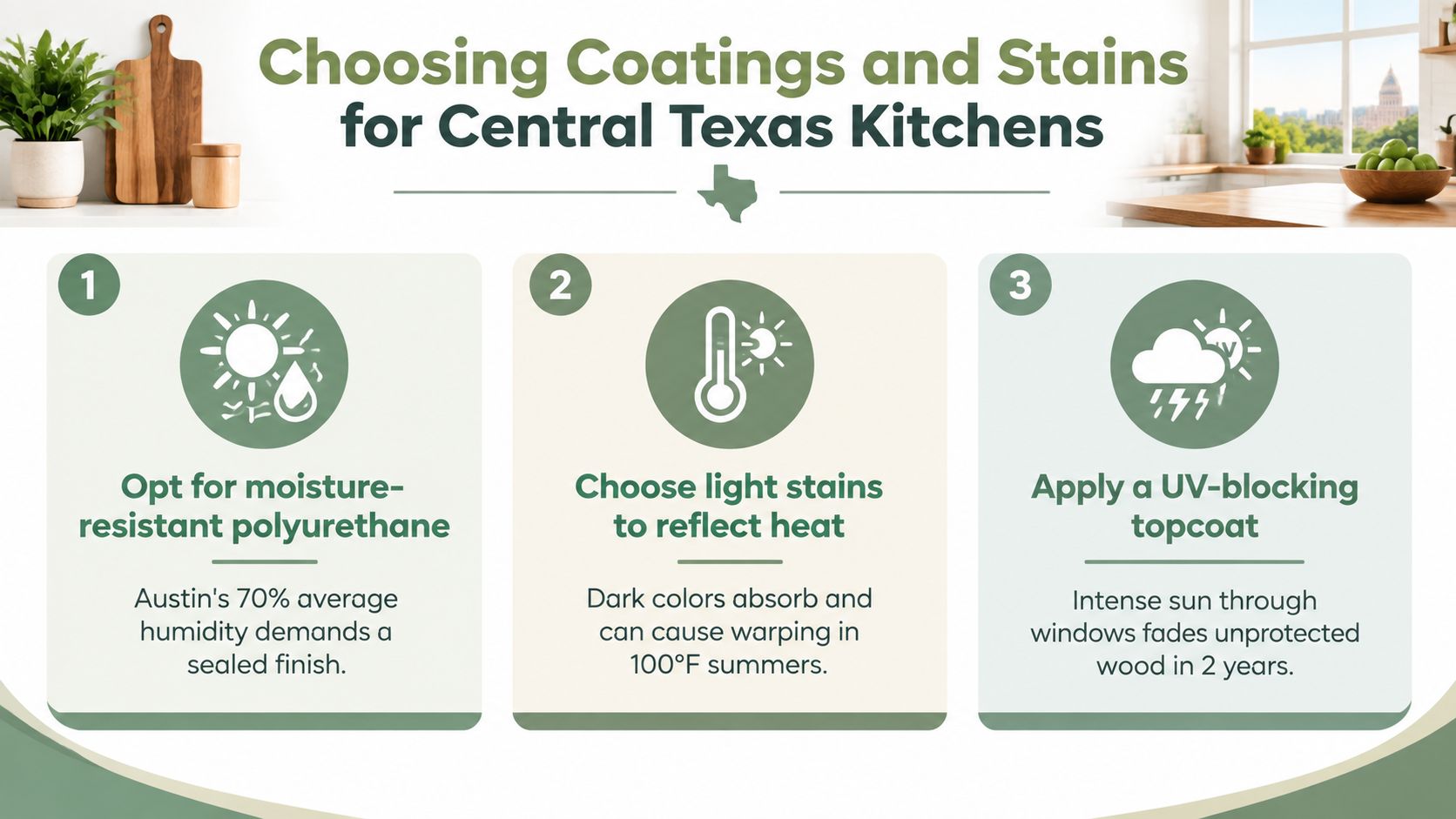
For homeowners trying to judge a cabinet by eye, the clue is often in the edges and joints. Veneer-faced doors can look luxurious from across the room, but if the edge banding is sloppy or the finish is thin, the cabinet's lifespan gets decided in those hidden transitions, not on the center of the panel.
Veneer vs Solid Wood in Real Kitchens
The showroom comparison is too simple. In a working kitchen, solid wood and veneer succeed for different reasons, and failure usually comes down to construction and detailing rather than the label on the door.
Solid wood gives you more material to sand, repair, and refinish. Its natural grain adds depth, but boards can warp, cup, or crack as moisture and temperature change. Veneer offers more consistent grain, less seasonal movement, and a cleaner appearance across wide doors and long cabinet runs. Its stable core keeps the panel flatter, but damage to the thin face limits how much material can be removed during repair.
Side-by-side comparison
| Criteria | Veneer Cabinets | Solid Wood Cabinets |
|---|---|---|
| Visual consistency | Very consistent grain and color | Natural variation, more character |
| Dimensional stability | Strong when built on a stable core | More prone to seasonal movement |
| Maintenance | Relies on good sealing and careful cleaning | Can be sanded and refinished more often |
| Repair flexibility | Limited once the face layer is breached | Better for deep sanding and spot repair |
| Design flexibility | Excellent for long, modern runs | Strong, but grain variation can be more visible |
| Climate response | Performs well when sealed and detailed correctly | Can move more in humid kitchens |
Veneer often fits remodels that call for a uniform wood tone and a refined, modern finish. Solid wood remains a practical choice in older homes when the goal is to preserve existing character, retain a traditional wood look, or leave more room for future sanding and restaining.
The repair trade-off matters over time. If the layout stays unchanged and the doors need a consistent appearance, veneer can be the more sensible material. If you expect decades of hands-on maintenance, solid wood provides greater repair margin. Neither material can compensate for poor edge treatment, weak joints, or inadequate finish protection.
Choose the cabinet you can maintain in your kitchen, not the one that only looks good in a showroom.
Climate adds another consideration in Central Texas. Heat and humidity cycling put pressure on finishes, joints, and exposed edges, so a veneer cabinet needs a sound core and careful sealing around wet areas. Solid wood also moves under those conditions. Its extra sanding depth does not prevent moisture-related movement or repair failures.
The build deserves closer attention than the material name. A well-made veneer cabinet with a stable substrate, properly bonded face, and protected edges can hold up better than a poorly built solid-wood cabinet moving from its first season. Inspect the doors, edge bands, seams, and sink-area details before deciding.
Where Veneer Cabinets Actually Fail First
Most veneer problems don't start in the middle of the door. They start at the edges, the seams, the sink base, and around appliance cutouts where moisture can get in and adhesives begin to fail. That's the part too many people miss. The face can look fine while the weak point is hidden in the construction details.
Humidity cycling is the other big issue. The USDA Forest Service notes that distortion is minimized when veneer and substrate have similar swelling and shrinkage behavior, similar moisture content at bonding, and minimal in-service moisture change. When those conditions aren't met, seasonal RH swings can trigger buckling, cracking, or veneer checking as the thin face moves faster than the core (USDA moisture guidance).
The failure zones that matter most
- Sink bases: Repeated spills, steam, and slow leaks soften adhesives and swell the substrate.
- Dishwasher edges: Heat and moisture from daily cycles stress the panel edges.
- Refrigerator openings: Condensation and tight clearances can trap humidity.
- Door and drawer seams: Small gaps let moisture work inward if the finish is weak.
- End panels near windows: Sun and heat dry the surface unevenly and can open joints.
That pattern shows why the cabinet face isn't the whole story. A veneer cabinet in Austin or Lakeway can be fine in the main field of the door and still fail early at a sink base if the edge sealing is weak. West Lake Hills homes with bright, sun-facing kitchens often show the same issue near window runs, where finish breakdown starts at the perimeter.
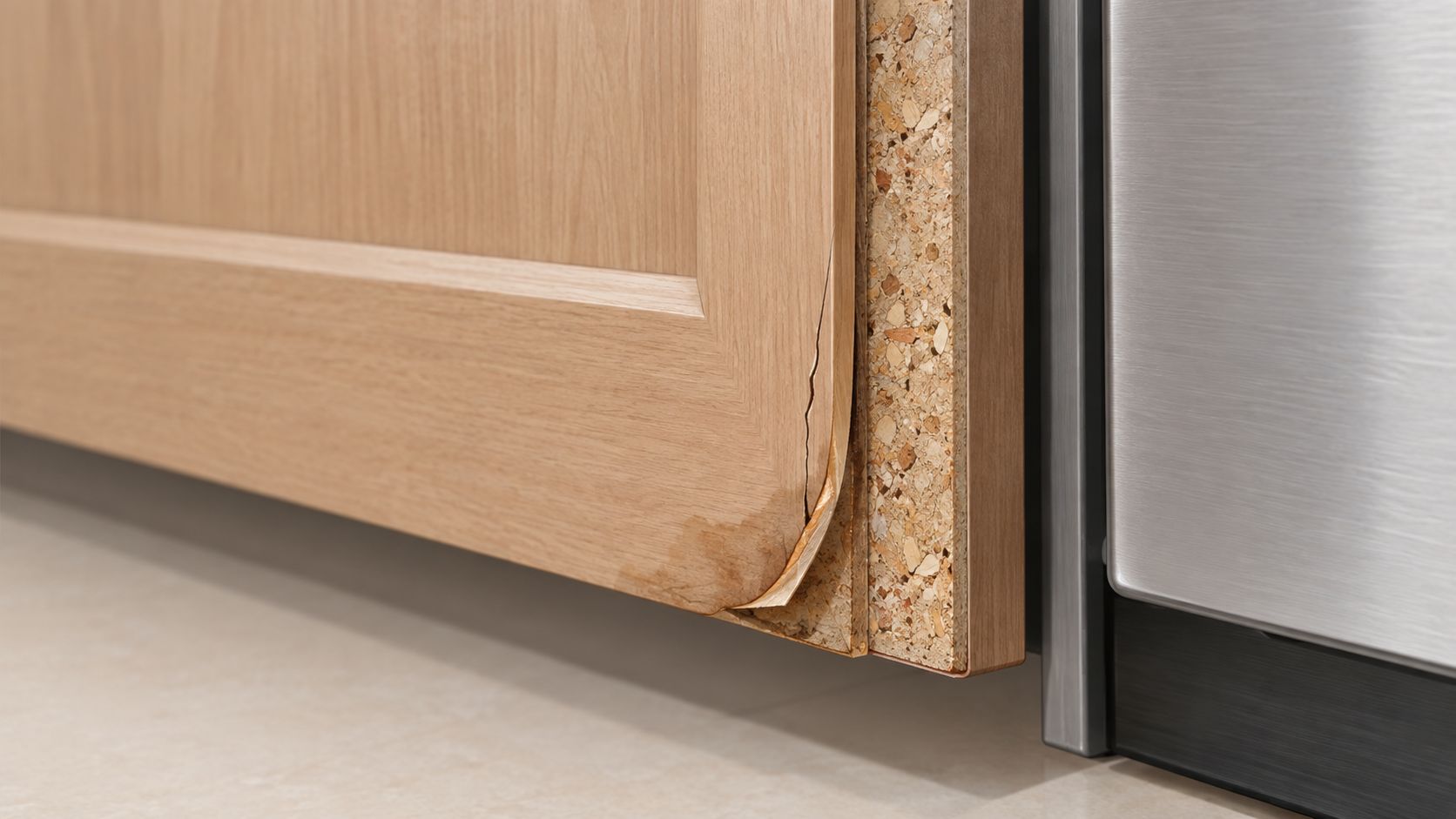
A useful rule in the field is simple. If the damage is centered in a splash zone or along an edge, you're usually looking at a construction or sealing problem, not just wear. That's why moisture-resistant cores, balanced construction, and protected cutouts matter so much more than the veneer species alone.
Refinishing and Repairing Veneer Cabinets
Veneer cabinets can often be repaired, but their thin face layer leaves little room for aggressive sanding. Refinishing should rely on careful cleaning, light scuff-sanding, bonding repairs, and a compatible new finish. Sand too much and the core beneath the veneer becomes visible.
In Buda, Georgetown, and Pflugerville kitchens, start with a close inspection. Check for bubbling, lifted edges, chipped corners, and swelling around sinks or dishwashers. An intact face over a firm substrate is a good refinishing candidate. Veneer that has separated across a large area usually calls for a replacement door or panel.
What usually can and can't be saved
- Usually repairable: dull finish, minor scratches, light edge wear, small chips, and isolated adhesion problems.
- Often replaceable: large bubbles, widespread delamination, swollen particleboard, and damage that reaches the substrate.
- Usually not worth chasing: panels with structural swelling around a sink base or repeated water intrusion.
Surface preparation determines whether the repair holds. Degreasing, light sanding, and complete dust removal give new veneer or edge banding a clean, scuff-sanded substrate for adhesion, according to neutral installer guidance (refacing instructions). Skipping those steps can leave a finish that looks sound initially but releases at an edge or seam.
Restore My Kitchen ATX offers cabinet refinishing as a non-demolition option when the cabinet boxes remain sound. Their Restore My Kitchen ATX cabinet refinishing process describes updating the finish without replacing the entire kitchen.
Practical rule: If the substrate is soft, swollen, or still holding moisture, refinishing only covers a structural problem.
Factory-style results also depend on application and curing conditions. Controlled spraying produces a more even film than a rushed on-site coat over grease or dust, but preparation remains the deciding factor. Allowing each repair and coating to cure fully reduces the chance of early failure, especially around sink bases, dishwasher edges, and other wet-use areas.
Choosing Coatings and Stains for Central Texas Kitchens
Austin kitchens do not live in a neutral climate. One climate source reports annual humidity around 63%, and it notes seasonally higher humidity too (Austin climate). In the Greater Austin area, heat also stays in the mix for much of the year (Greater Austin climate). That mix of moisture, heat, steam, and afternoon sun is hard on wood finishes, especially at cabinet edges, sink bases, and door seams.
For veneer cabinets, the finish system matters as much as the veneer itself. Factory-applied catalyzed finishes usually hold up better than rushed field coats because they cure into a more even, more resistant film. In practice, that gives you better protection against cleaning products, humidity swings, and the small water events that happen in real kitchens.
For a deeper look at finish selection, see our guide to protecting finishes in Texas humidity.
What to specify
- Moisture-resistant topcoats for sink runs and dishwasher-adjacent cabinets.
- Balanced finishing on both sides of doors and panels to help limit distortion.
- Edge sealing at cutouts, exposed seams, and end panels.
- UV-resistant protection for kitchens with strong daylight, especially afternoon sun.
- Proper moisture conditioning before installation, so parts are closer to equilibrium when they go in.
A finish can look fine on the face and still fail early at the edge. That is why I pay close attention to cutouts, seam lines, and the areas around sinks and dishwashers. Those spots take the first hit from steam, splashes, and repeated cleaning.
I would rather see a fully sealed system on a stable core than a prettier door with weak detailing.
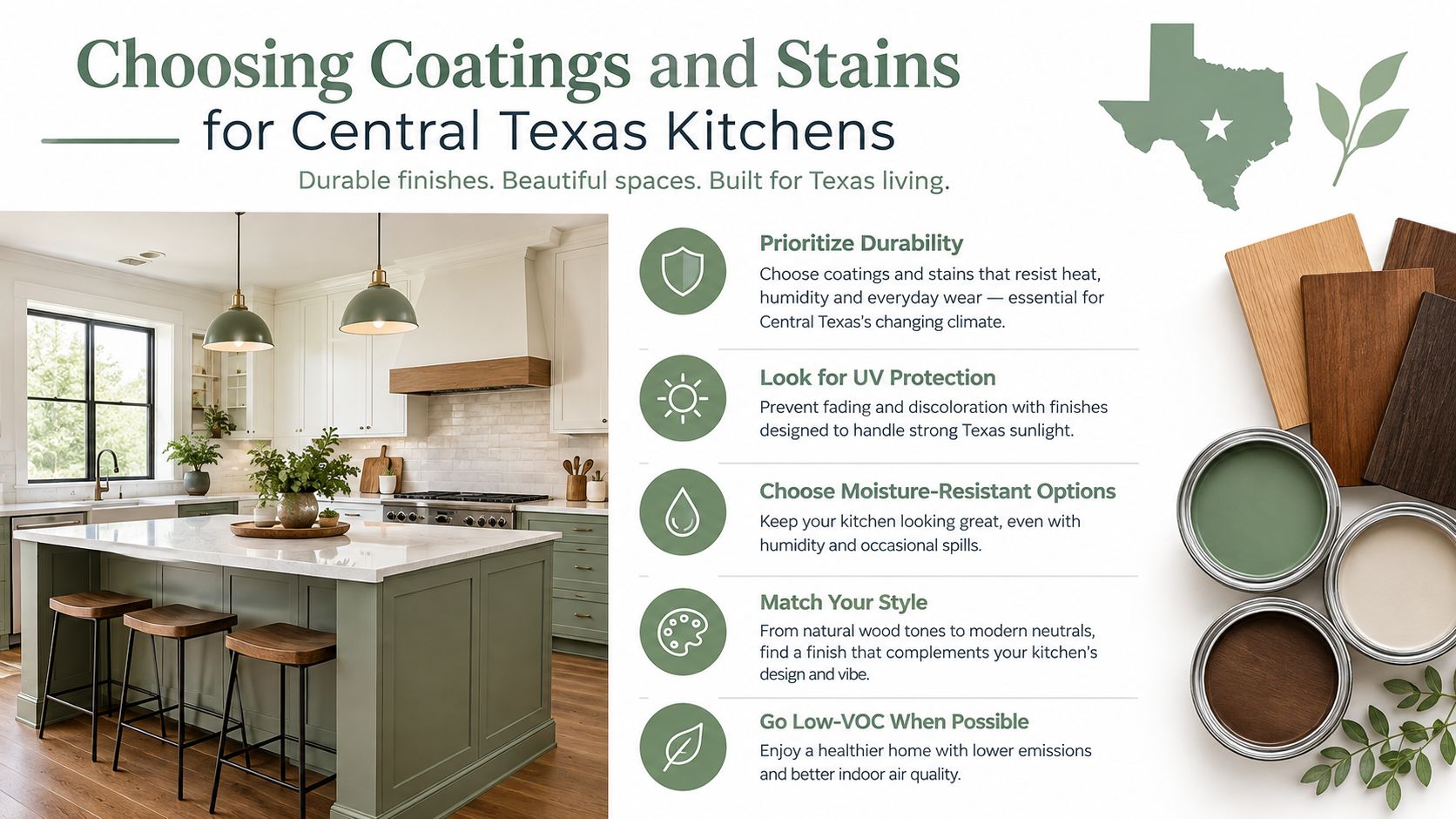
If you are comparing contractor recommendations, ask what is being done on the edges, not just the visible faces. The finish only works if the vulnerable spots are sealed as carefully as the show surfaces.
Making the Right Choice for Your Kitchen
The decision is not veneer versus solid wood in the abstract. It is how much moisture, heat, and daily abuse your kitchen sees. A sink base that gets splashed, a dishwasher that throws off steam, weak ventilation, or long runs with direct afternoon sun will expose weak detailing fast.
Veneer works well in a climate-controlled kitchen with a stable core and careful finishing. In Central Texas, that means paying attention to humidity swings as much as the door style. Homes in places like Hutto, Driftwood, or Bee Cave often do fine with veneer if the cabinet maker seals edges properly and the installation is done with care.
The comparison with laminate is often more useful than the one with solid wood. Laminate can tolerate some moisture better in the right setting, while veneer gives you real wood character and a finer grain look when it is built and sealed correctly. The right call depends on whether you want more natural material and are willing to maintain the vulnerable spots, or whether maximum abuse tolerance matters more.
Use this checklist
- Choose veneer if you want a real-wood look, stable panels, and consistent grain across long cabinet runs.
- Lean toward laminate if the kitchen sees frequent water exposure or you want the easiest cleanup surface.
- Choose solid wood if long-term sanding, restaining, and traditional repair work matter most.
- Avoid veneer if the room stays damp, ventilation is weak, or the sink area already shows swelling.
Planning matters too. Cabinets should be judged with ventilation, layout, and finish choices, not just the door sample. If you are mapping out a larger update, kitchen renovation planning helps frame the decision around how the kitchen really gets used.
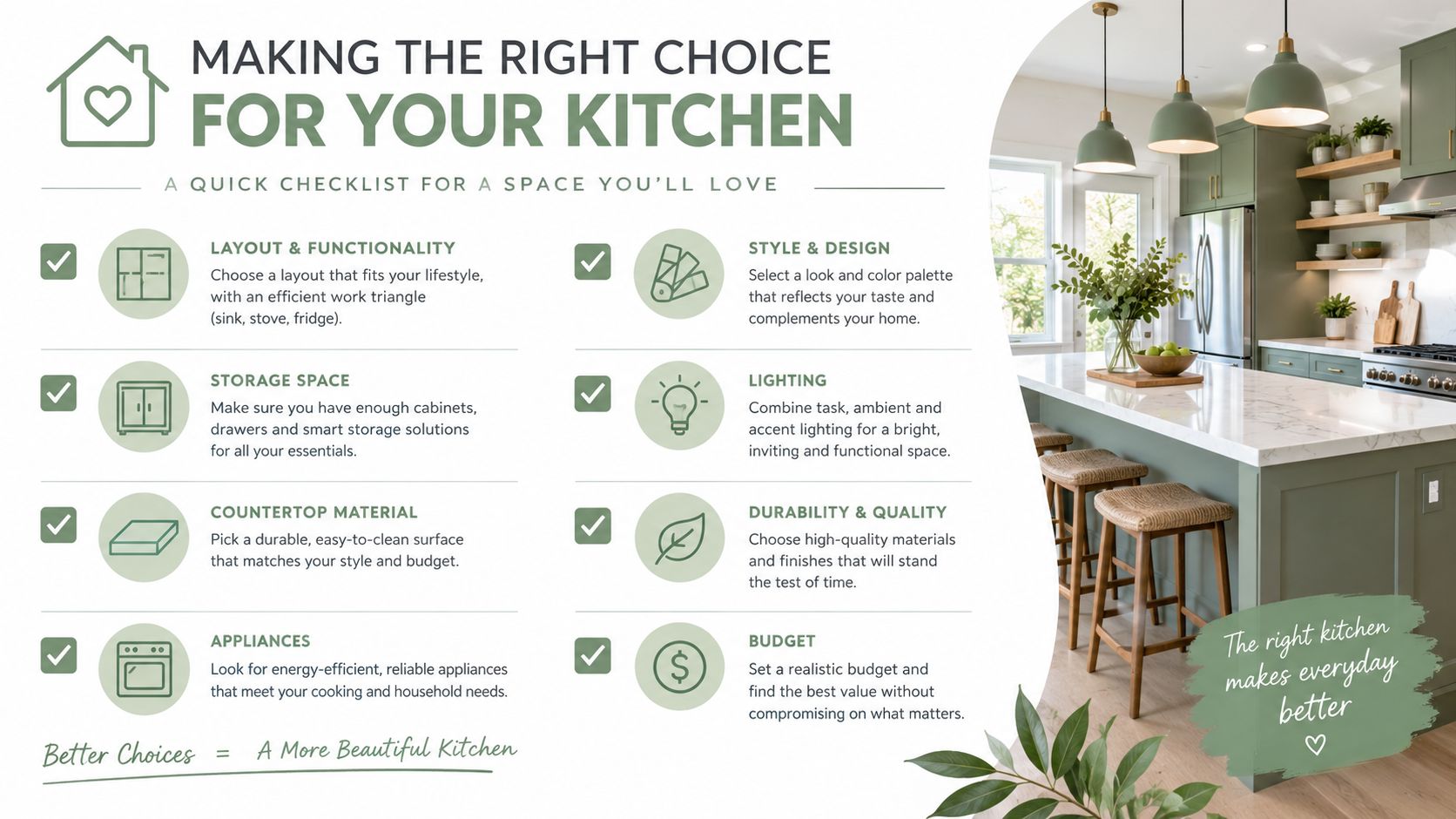
If you want veneer to hold up, specify the build details that stop early failure. Moisture-resistant cores, careful edge banding, balanced finishing, and protected sink and oven zones matter more than a pretty face frame. The cabinets that last in real kitchens are the ones whose seams, cutouts, and exposed edges were sealed as carefully as the show surfaces.