September 5, 2026
Refacing vs Painting Cabinets: How to Choose
You're standing in a kitchen that still works, but the doors date the room. Maybe it's oak from the late 90s, maybe the finish has gone dull around the pulls, and maybe you've got one quote that feels cheap and another that feels like a remodel. That's the core decision with refacing vs painting cabinets. It's not just about color, it's about how long you plan to live with the cabinets, how hard your household is on finishes, and whether the boxes underneath are worth keeping.
| Factor | Cabinet Painting | Cabinet Refacing |
|---|---|---|
| Upfront cost | Lower, commonly about $2,000–$6,500 for a typical kitchen, or about $30–$70 per linear foot | Higher, commonly about $5,000–$13,000, or about $150–$450 per linear foot |
| What changes | Existing doors stay, finish changes | Doors, drawer fronts, and visible cabinet surfaces change |
| Typical timeline | About 3–5 days, plus curing time | About 2–5 days |
| Durability | Commonly about 5–7 years before major wear shows | Commonly about 15–20 years |
| Best fit | Sound cabinets, tight budget, quick refresh | Sound boxes, tired doors, longer-term upgrade |
If you live in Austin, Round Rock, Cedar Park, or Lakeway, the right answer usually comes down to one thing: whether the cabinets need a finish update or a surface reset. Painting is the lean move. Refacing is the more complete visual change. I'd tell most homeowners to start by inspecting the substrate, then pricing the actual lifecycle, not just the first invoice.
Table of Contents
- Standing in Your Kitchen Trying to Decide
- What Each Process Actually Involves
- Side by Side on Cost Durability and Timeline
- The Decade Math Most Comparisons Skip
- When the Cabinets Themselves Are the Problem
- Which Option Fits Your Austin Home
- Getting a Quote and Planning the Project
Standing in Your Kitchen Trying to Decide
The classic moment looks like this. You're in a kitchen with old oak cabinets, the countertops are staying for now, and the room feels darker than it should. One contractor says paint will freshen everything up. Another says refacing will make the kitchen look much newer without replacing the boxes.
That's where people get stuck, because both quotes can sound reasonable. But the core question isn't which one sounds nicer on paper. It's whether the cabinets underneath can support a painted finish, whether the visible surfaces are too tired to save, and how much wear your household is going to put on them.
Start with the cabinet itself
If the boxes are straight, dry, and solid, painting can be a smart move. If the doors are tired but the structure is fine, refacing gives you a more complete reset without opening the walls or changing the layout. That's the difference most homeowners need to hear.
Practical rule: if the cabinet boxes are healthy and you mainly hate the color, paint is usually enough. If the doors and edges are worn out, refacing is the cleaner fix.
In Austin, that question gets sharper because kitchens deal with heat, steam, and heavy use. A painted finish in a lightly used guest kitchen is one thing. A painted finish on a sink base that takes daily abuse is another. That's why I always look first at wear patterns around pulls, edges, and moisture-prone spots before talking color.
Think about your exit plan
A homeowner in Hyde Park who wants a fast refresh before listing the house doesn't need the same solution as a family in Bee Cave planning to stay for the next decade. A rental in East Austin has a different budget logic than a long-term primary home in Steiner Ranch. The decision has to match the calendar in your head.
If you only need the kitchen to look clean, current, and market-ready, paint can be the right call. If you want a stronger visual reset that can hold up longer, refacing starts making more sense. That's the framework I'd use every time, lifecycle cost, substrate condition, and household wear.
What Each Process Actually Involves
Cabinet painting and cabinet refacing are not the same kind of job. One keeps the doors and changes the finish. The other replaces the visible front-end parts of the cabinets and leaves the boxes in place. If a quote doesn't clearly separate those steps, it's too vague to trust.
Cabinet painting, step by step
A real cabinet-painting job starts with degreasing, because kitchen oils ruin adhesion. Next comes sanding, which improves the bond so the new coating doesn't just sit on top of grime or gloss. Then the cabinets get primed, followed by finish coats, usually sprayed for a smoother result. Hardware comes off, stays labeled, and goes back on after the finish cures.
The prep matters more than the color. A cabinet prep guide recommends sanding for adhesion and even a second primer coat when covering dark cabinets with a lighter color, with about 24 hours or overnight between coats (cabinet prep sequence and primer timing). That's the part cheap bids tend to rush.
Cabinet refacing, step by step
Refacing changes the parts you see and touch every day. The old doors and drawer fronts come off. New fronts go on, usually in a slab, shaker, or similar profile. The exposed cabinet boxes get covered with matching veneer or laminate, so the face frames and sides match the new look. Hardware and hinges are refreshed, and the fronts are adjusted so the lines are tight.
For homeowners comparing this with a paint job, the key difference is simple. Painting preserves the old door and drawer faces. Refacing replaces them. That's why refacing can solve style problems that paint can't, especially when the old profile looks dated even if the cabinet boxes are still usable.
The cheapest bid is often cheap because it skips the annoying prep work, not because the job got smarter.
If you're comparing contractors in Austin, a dedicated cabinet painting service like cabinet painting should describe the prep and spray process clearly. If the estimate only says “paint cabinets” with no mention of degreasing, sanding, priming, or door removal, keep looking.
Side by Side on Cost Durability and Timeline
The decision gets real in a working kitchen. Homeowners live with fingerprints, steam, handles, kids, pets, and grocery bags hitting doors every day. That is why durability and disruption matter more than sales talk.
You already have the basic cost and timeline comparison above. The useful question now is what those numbers mean once the cabinets are back in use.
Paint is the lower-risk spend up front, but it only makes sense if the boxes and doors are worth keeping and the household is willing to live with more wear sooner. Refacing costs more because you are replacing the visible parts, not just changing the color. That extra spend buys a longer service life and less chance of circling back for another finish project too soon.
The gap shows up fast in a busy kitchen. Painted doors take the most abuse at pulls, corners, sink areas, and around appliances. That is where wear shows first, especially in homes where the kitchen gets heavy daily use. Refaced cabinets handle that better because the door and drawer fronts are new, and the face frames and sides get fresh material too. If you want a better sense of how local conditions affect that choice, see how Texas humidity affects cabinet finishes.
The timeline is shorter, but not equal in practice
Painting often looks faster because the change is visible right away. The complete schedule is not just the spray day, though. The finish still has to cure, and the kitchen stays more fragile until that happens.
Refacing usually keeps the work window tight as well, but it avoids the same coating-cure issue. Doors come off, new fronts go on, and the kitchen gets reset with less dependence on a finish hardening perfectly.
For an Austin-area kitchen, that matters. In places like West Lake Hills or Dripping Springs, people want the work done cleanly and with minimal disruption, but they also want a result that holds up in heat, humidity, and constant use. Painting can be the right call if the cabinets are solid and the household can be careful with them. Refacing makes more sense if the doors are tired, the style is dated, or you are tired of planning around the next touch-up.
The smarter comparison is lifecycle, not just price
The cheap quote is only cheap if you stop there. A paint job that needs to be revisited sooner starts looking expensive once you count another round of labor, setup, cleanup, and kitchen downtime. Refacing is the more practical buy when you want to get the most years out of cabinets that are still structurally sound.
That is the part homeowners skip too often. They compare the first invoice and ignore how long they want to stay with the same kitchen.
If you are staging a house, updating a rental, or buying time before a bigger remodel, painting usually makes sense. If you plan to live with the cabinets for years and the existing boxes are worth keeping, refacing is the stronger long-term move.
The Decade Math Most Comparisons Skip
Upfront cost is easy to understand. Stopping there is the mistake. Cabinets live in one of the hardest-working rooms in the house, so the first invoice rarely tells you what the finish will cost over time.
Painted cabinets are commonly reported to last about 5–7 years before significant wear becomes visible, especially around handles and other high-touch areas (durability comparison). Quality refacing is commonly reported at about 15–20 years under normal use. That means the cheaper option can come around again sooner than people expect.
The repeat-work problem
If a paint job costs $4,500 and gets repeated twice over 15 years, you're roughly at $13,500 before you even talk about touch-ups or the nuisance of living through another project. A one-time refacing in the $9,000 to $12,000 range can come out ahead on lifecycle cost, especially if the cabinets are otherwise sound.
That's the part many comparison articles skip. They talk about the first spend, not the second round of labor, setup, cleanup, and kitchen downtime. Once you count that, painting stops looking like the automatic bargain in a busy home.
Daily use changes the math
A painted cabinet finish is more sensitive to wear at pulls, corners, and sink areas. It also depends more heavily on cleaning habits and on how careful the household is with abrasive products. Refaced doors and drawer fronts are built for that surface wear better, which is why they stay attractive longer in active kitchens.
Contractor's note: if your kitchen gets hit hard every day, by kids, pets, steam, and constant cleaning, count on the finish to age faster than the brochure suggests.
That's why I push Austin homeowners to think in years, not quotes. A family in Pflugerville that cooks daily will beat up a finish differently than a couple in Buda who barely uses the kitchen on weekdays. The cabinet math should reflect the household, not the sales pitch.
When the Cabinets Themselves Are the Problem
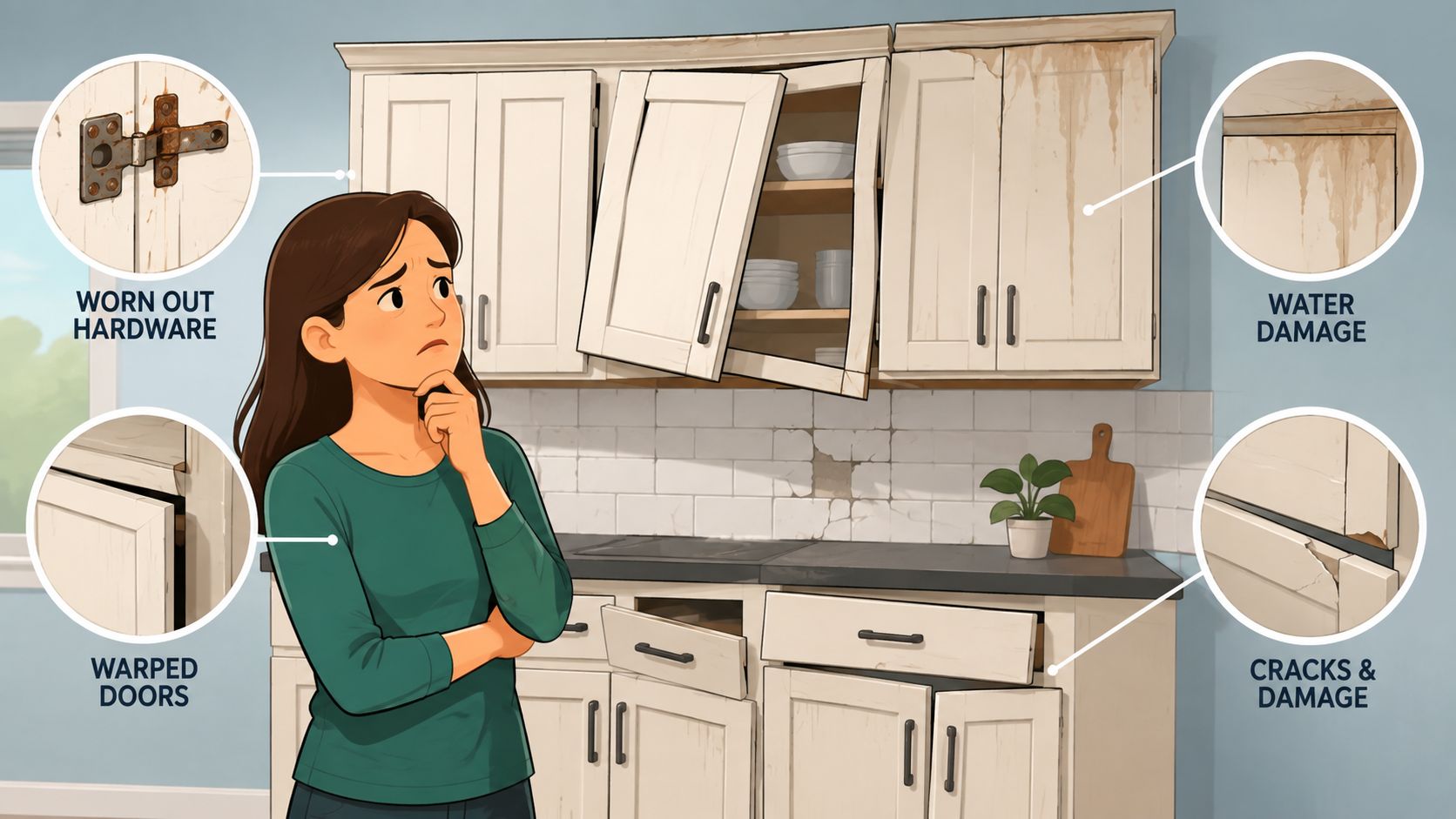
Some cabinets are fine candidates for paint. Others need a different fix. The telltale signs show up in the substrate, the edges, and any moisture damage you can feel before you fully see it.
What paint can't hide
Paint only performs as well as what sits under it. Swollen particleboard edges, peeling thermofoil, MDF that has already softened from water, and delaminated laminate all keep failing under the new finish. The cabinet may look better on day one, then start showing the same problems again soon after.
Refacing handles that problem differently. It replaces the visible wear surfaces, so the old doors, drawer fronts, and front-facing veneer are taken out of the picture. If the boxes are sound, you reset the parts that take the daily abuse instead of coating over a tired surface.
Watch the moisture zones first
Central Texas kitchens are hard on finishes. Humidity, summer heat, and uneven ventilation all work on cabinet faces, and the worst wear usually shows up around sinks, ranges, and dishwashers. In hillside homes near Lake Travis, or anywhere the kitchen traps heat and air does not move well, painted MDF and damaged laminate can break down fast.
Run your finger along the bottom edge of a door. Press the sink base panel gently. Look for soft spots, swelling, and flaking around the handles. Those are the signs that the finish is no longer the main issue, the material is.
The box still has to earn its keep
Refacing is not a fix for rotten boxes. The cabinet structure still needs to be straight and sound. If the carcasses are solid and only the doors are tired, refacing is usually the more honest repair because it targets the parts that are failing.
That is the difference between a cosmetic bandage and a real surface reset. In humid Austin kitchens, especially older ones or kitchens with mixed materials, that difference matters a lot more than most homeowners realize.
Which Option Fits Your Austin Home
Here's my direct take. If the cabinets are structurally sound and you mainly want a color change, painting is the better spend. If the cabinets look dated, the doors are worn, and you want the kitchen to feel updated for years, refacing is the stronger choice.
Where painting makes sense
Painting wins in older bungalows in Hyde Park and Travis Heights where the cabinets are still solid and the goal is a cleaner look before selling. It also makes sense in rentals in East Austin where the owner needs to control capex and keep the project simple. If the boxes are fine and the layout stays as-is, paint gets you the most visual change for the least money.
Painting is also the right call when the home is only a temporary hold. If you know a larger remodel is coming later, I wouldn't sink refacing money into cabinets you plan to rip out anyway. Spend lighter now, keep the space clean, move on when the timing is right.
Where refacing makes more sense
Refacing is the better bet in Round Rock, Cedar Park, Pflugerville, and other late-90s or early-2000s subdivisions where the cabinet boxes are usually serviceable but the doors look tired. It's also the cleaner answer for homeowners in Georgetown, Hutto, Kyle, or Bee Cave who want a one-and-done update and don't want to revisit the kitchen finish in a few years.
If you're planning to stay ten years or longer, refacing usually matches the way real households use kitchens. The doors take a beating, the faces stay fresh, and the style shift is more obvious than paint alone. That's the value.
When neither one is enough
If you want to change the layout, add storage, or fix awkward traffic flow, neither paint nor refacing solves that. At that point, full replacement is the honest answer. Don't spend money polishing a kitchen that already functions poorly.
For owners who want cabinet restoration without full replacement, a local team that handles refinishing, painting, and remodel coordination can be useful. Restore My Kitchen ATX works across Austin, Westlake, Bee Cave, and the broader metro, and it's the kind of contractor people call when the central question is whether the existing boxes deserve to stay.

Getting a Quote and Planning the Project
Get two to three written quotes, and make sure at least one contractor is pricing paint and another is pricing refacing. Don't let one company steer you toward only the method they prefer. You want apples-to-apples details, not sales pressure.
Ask the questions that separate a finisher from a handyman
Find out how they prep the surfaces. Ask what primer they use, whether the doors are sprayed in a booth or on-site, and how they label and reinstall the cabinet parts. Ask if the estimate includes hardware replacement or if they're reusing hinges and pulls. If they can't answer those questions clearly, they're not ready for your kitchen.
A serious estimate reads like a scope of work. A weak estimate reads like a guess.
You should also ask what the warranty covers, especially for chipping and yellowing. That matters more than a glossy before-and-after gallery. A good finish system is only as good as the process behind it.
Time the project to your life, not just the calendar
Austin weather and household schedules matter here. Summer humidity can slow paint cure, school calendars affect how long you can live around a kitchen project, and HOA rules in neighborhoods like Circle C or Steiner Ranch can limit contractor hours. Build the project around the week you're living, not the week you wish you had.
If you're still mapping out the larger remodel picture, the kitchen renovation planning guide is the kind of checklist that helps you think through sequencing, finishes, and timing before anyone starts unloading tools.
Run this checklist the week before work starts
- Empty all cabinets and drawers: Pull out dishes, pantry items, and small appliances so the crew can work cleanly and you're not scrambling mid-project.
- Protect nearby surfaces: Move anything fragile off counters and clear the refrigerator zone, pantry entry, and adjacent rooms.
- Set up a temporary dish station: Keep a few plates, cups, and utensils in one easy-to-reach box so daily life doesn't turn chaotic.
- Confirm appliance access: Make sure the dishwasher, stove, and refrigerator can be reached and disconnected if needed.
- Cover your schedule: Plan meals outside the house if the kitchen will be out of service longer than expected.
Make the decision based on the kitchen you have, not the one in the quote booklet. If you want help sorting out whether your Austin cabinets should be painted, refaced, or left alone until a bigger remodel, reach out to Restore My Kitchen ATX. They handle cabinet refinishing, painting, and kitchen restoration work across the Austin metro, and they can walk you through the option that fits your cabinets, your budget, and your timeline.