August 29, 2026
Garage Door Painting Service: Texas Homeowner Guide
You pull into your driveway in Round Rock or Cedar Park and notice the garage door before anything else. The panels look chalky, the old color has faded unevenly, or peeling paint has started along the lower edges. Because the door sits at eye level across a broad portion of the front elevation, a tired finish can make an otherwise well-maintained home look neglected.
A garage door painting service should address more than color. In Central Texas, the right finish protects wood from moisture and warping, helps limit oxidation on steel, and gives fiberglass and composite surfaces a better defense against heat and ultraviolet exposure. The material, door orientation, existing coating, and weather window all determine what will hold up.
Table of Contents
- Why Garage Door Finishing Matters for Texas Homes
- Professional Preparation and Coating Process
- How Texas Heat and Sun Affect Garage Door Coatings
- Choosing Between Paint Stain and Protective Coatings
- Why Hiring a Professional Finishing Contractor Pays Off
- Timeline Costs and Local Service Coverage
Why Garage Door Finishing Matters for Texas Homes
When a garage door faces the Texas sun all afternoon, its finish has to do more than make the entry look fresh. The modern garage door became a major part of residential design after C.G. Johnson developed the upward-acting overhead garage door in 1921, followed by the first electric opener in 1926, according to the history of the garage door industry. By the 1960s, garages accounted for about 45% of a home's square footage, helping make the door one of the most visible surfaces on a home.
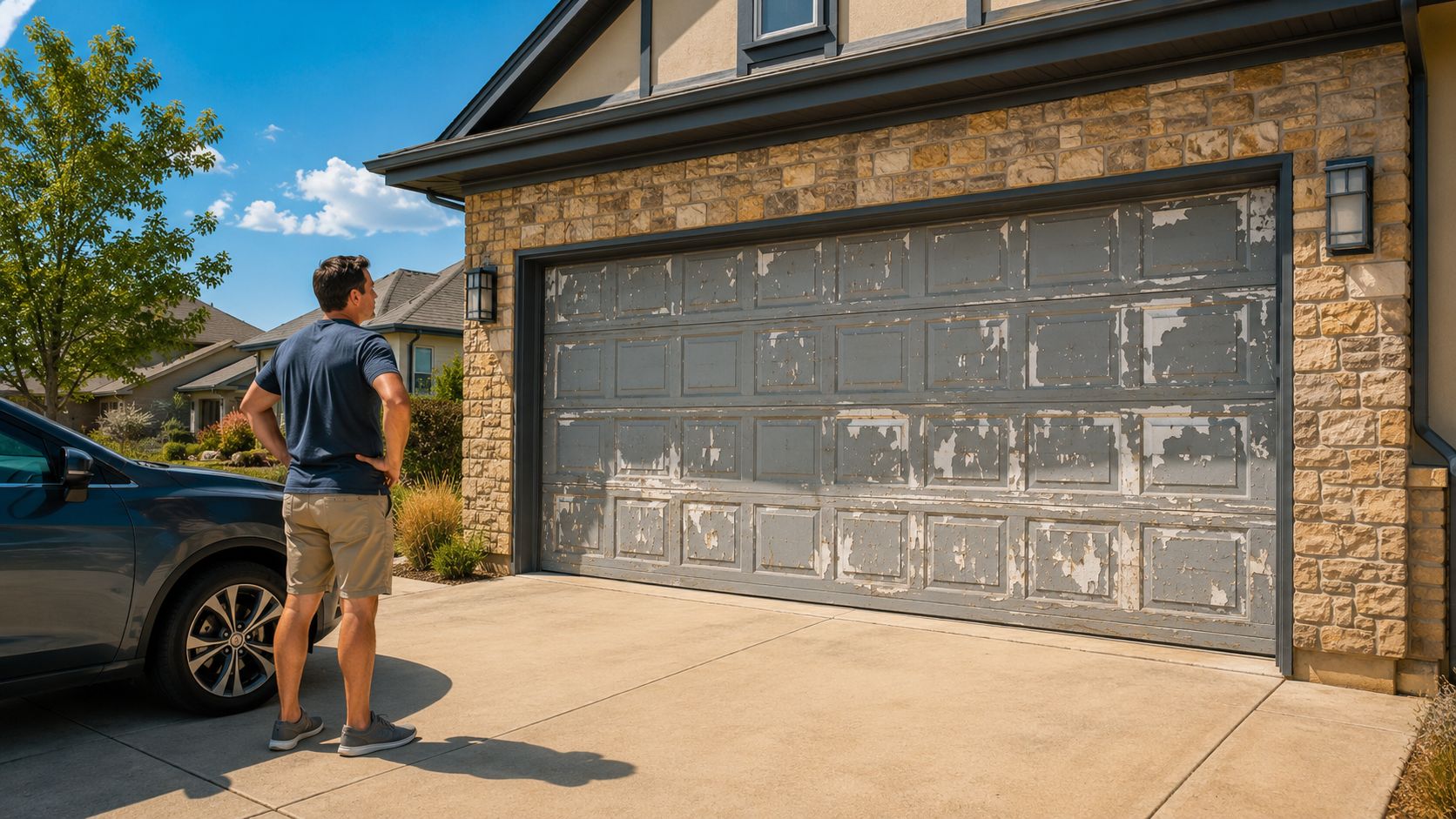
That exposure is especially demanding in Austin, Lakeway, Bee Cave, West Lake Hills, and other Central Texas communities. A garage door is a broad moving surface that absorbs heat, collects dust, and cycles through humidity and weather changes. Fading often appears first, while longer exposure can leave wood vulnerable to warping, steel prone to oxidation, and fiberglass brittle at the surface.
Practical rule: A new color cannot correct a failing substrate. The coating system must begin with a clean, stable surface.
Material and orientation determine the right finish. Wood may need repairs, stain removal, or a flexible exterior primer before paint or stain. Steel commonly needs rust treatment and a corrosion-inhibiting primer. Aluminum, fiberglass, vinyl, and factory-finished composite doors require products that bond properly without leaving a brittle film.
Curb Appeal Is Only Part of the Equation
Color still affects the home's appearance. A refreshed door can coordinate the trim, siding, masonry, or front entry and make the facade look intentional. In direct Texas sun, however, a fashionable color can fade faster if the coating and preparation do not suit the substrate. Darker colors may also absorb more heat, increasing movement on some door materials.
The history and maintenance guidance for garage doors places common repainting intervals at about 5 to 10 years for acrylic coatings, up to 15 years for oil-based paint, and around 10 years for enamel finishes. These are working ranges, not promises. Direct sun, poor preparation, standing moisture, and an incompatible product can shorten them.
A reliable garage door painting service treats the project as exterior finishing. The contractor assesses the surface, removes failing material, selects a substrate-specific primer, and applies a compatible topcoat or UV-resistant protective coating. Scheduling also matters, because the film must cure evenly rather than bake or collect moisture during application. That standard applies in Pflugerville and Hutto as much as in Austin's west-side neighborhoods.
Professional Preparation and Coating Process
A garage door can look clean after painting and still fail within a season if the surface was not prepared for Central Texas exposure. A professional starts by identifying the door material, existing finish, sun direction, and areas where movement or moisture will challenge the coating. Loose or chalking paint, rust along lower edges, damaged weather seals, and hardware that must remain unpainted all need attention before application.
1. Assess and mask
The door is positioned for safe access, and the opener may be switched off while panels are moved during preparation. Masking protects handles, locks, weatherstripping, hinges, sensors, trim, brick, glass, and the driveway from paint or overspray. It also keeps coating out of moving joints, where buildup can cause binding.
On a south- or west-facing door, the assessment should influence the finish choice. A darker color may absorb more heat, while a UV-resistant coating may offer better durability than a decorative finish alone. The right system depends on both substrate and exposure.
2. Clean and abrade
Cleaning removes dirt, mildew, chalked pigment, grease, and loose residue. Depending on the surface, the contractor may use controlled pressure washing, soft washing, detergent cleaning, or hand scrubbing. The door must dry fully before sanding or priming, particularly around lower edges and panel joints.
Scuff-abrasion creates the mechanical profile needed for adhesion. A smooth factory finish can reject new paint after a simple wipe-down. Peeling areas are scraped back to a sound edge, then feathered so the repair does not telegraph through the new coating. Exposed steel requires rust removal and degreasing before primer.
3. Prime for the substrate
Primer selection changes with the door:
- Factory-finished steel: A bonding or metal primer helps the new system grip the existing finish. Exposed metal should receive corrosion treatment before topcoating.
- Wood and cedar: A stain-blocking exterior primer helps limit tannin bleed and uneven absorption. Repairs should be sanded flush first.
- Fiberglass: An adhesion-promoting primer is generally a better choice than a standard wall primer.
- Aluminum or galvanized areas: Cleaning, abrasion, and a compatible metal primer are required instead of a casual coat of exterior paint.
For steel, the published steel-door painting practices call for exposed metal to be treated for corrosion and coated within 24 hours with a quality exterior latex topcoat. The guidance also references 1 to 2 primer coats and a minimum dry film thickness of 1.5 mils per coat, depending on exposure conditions.
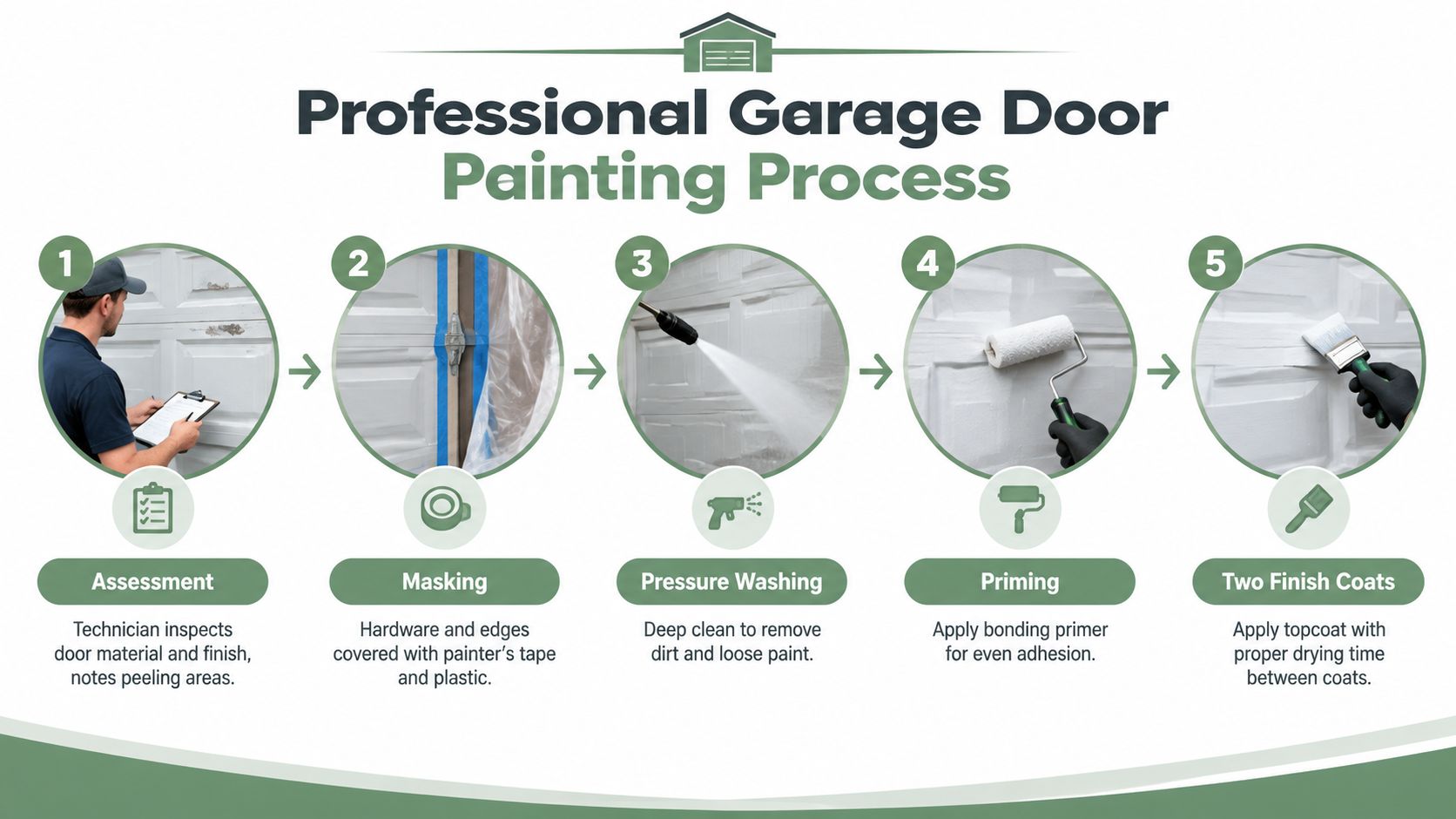
4. Apply controlled finish coats
Professionals commonly use airless or HVLP equipment to create an even film across broad panels and recessed profiles. Spraying requires control of overspray, wet-edge movement, flash time, and film build. Thin, even coats are safer than using one heavy pass to hide surface defects.
Weather conditions determine whether the coating cures properly. Technical guidance recommends painting between 50 and 85 degrees Fahrenheit, keeping humidity below 70%, avoiding direct sun, and allowing a rain-free window before and after application, as outlined in this garage-door painting conditions guide. A hot panel can skin over before the layer beneath cures, trapping moisture or solvent and causing bubbling or peeling.
The same attention applies to detailed exterior work such as front door refinishing. Final steps include removing masking carefully, reinstalling hardware, checking seals and edges, inspecting the panels from multiple angles, and confirming that the door opens and closes without interference.
How Texas Heat and Sun Affect Garage Door Coatings
A garage door facing west in Austin can look sound after installation, then show fading, chalking, or edge cracking as repeated heat cycles stress the finish. Central Texas combines intense sun, summer temperatures often exceeding 100°F, and morning humidity that can reach 70% to 80%, according to this Austin heat and humidity painting guidance.
Ultraviolet light breaks down the binders that hold pigment together. The surface starts to chalk, colors lose depth, and dark or saturated shades can shift. South- and west-facing doors take the hardest exposure, especially without shade from trees, roof overhangs, or nearby structures.
Heat adds movement. A garage door expands as it warms and contracts as temperatures drop. A rigid film with weak adhesion eventually cracks at joints, panel edges, and repaired areas. Steel transfers heat quickly, while wood responds to both temperature and moisture.
Humidity creates another failure route. Moisture can remain beneath a coating that has not cured correctly, particularly when paint is applied during a damp morning or on a hot panel. Steel may blister or rust under the film. Wood may swell, warp, or lose adhesion where water reaches end grain and lower edges. Guidance on protecting finishes in Texas humidity explains why moisture control matters after application as well as during it.
| Environmental Stressor | Failure Mode | Most Affected Material | Resistant Coating Property |
|---|---|---|---|
| Intense ultraviolet exposure | Chalking, fading, and color shift | Wood, steel, fiberglass | UV-stable resin and fade-resistant pigment |
| Repeated heating and cooling | Cracking, brittleness, and adhesion loss | Steel, fiberglass, composite | Flexible exterior film with strong bonding |
| Humidity and trapped moisture | Blistering, peeling, rust, and swelling | Steel and wood | Corrosion resistance or vapor-permeable protection |
| Direct sun on dark colors | Excess heat absorption and panel stress | Older metal and composite doors | Heat-reflective exterior system |
The coating should match the stress, not only the color board. A west-facing steel door may need a flexible, strongly bonded system with UV-stable pigment. A wood door needs attention to moisture movement, especially along end grain and lower edges. Dark colors can increase heat absorption on older metal and composite panels.
Application conditions still affect service life. Austin-area guidance recommends roughly 50 to 90°F, humidity under about 70%, and no imminent rain, since excessive heat can make coatings dry too quickly, as explained by Hill Country exterior painting guidance.
Choosing Between Paint Stain and Protective Coatings
A west-facing garage door in Dripping Springs or Driftwood takes a harder beating than a shaded north-facing entry. The right finish therefore depends on two decisions, the door material and its daily sun exposure. Wood with visible grain needs a different system from smooth steel, aluminum, or a compatible composite surface.
Acrylic latex paint gives the widest color range and works well when the door needs a complete visual change. On properly prepared wood, steel, aluminum, or compatible composite, it forms an opaque protective film. Its performance depends heavily on primer selection and adhesion. Color selection must come after surface preparation. Chalk, grease, rust, and a slick factory finish all need attention before the coating goes on, or peeling can follow even with an attractive color.
Stain suits wood doors where the grain is the main design feature. A penetrating or semi-transparent exterior stain can accommodate wood movement more naturally than a rigid opaque film, but it will not hide uneven repairs or old color changes. Strong sun also demands closer inspections. Wood-door maintenance guidance commonly places restaining around every 2 to 3 years in strong-sun climates, as discussed in this summer garage-door protection guidance.
UV-resistant clear coatings preserve an existing wood tone, stain, or decorative finish when that appearance is still sound. They add protection without covering the underlying character. A clear coat cannot stabilize a failing base, however. Faded, cracked, or poorly bonded stain remains a weak foundation beneath the transparent layer.
| Finish Type | Best Door Material | Sun Exposure Tolerance | Expected Lifespan | Maintenance Level |
|---|---|---|---|---|
| Acrylic latex paint | Steel, wood, aluminum, compatible composite | Good with proper primer and UV-stable product | About 5 to 10 years for acrylic coatings | Moderate |
| Oil-based paint or stain | Wood and selected prepared surfaces | Strong film or grain protection, depending on product | Up to 15 years for oil-based paint in suitable conditions | Moderate to high |
| Enamel finish | Smooth prepared metal and compatible surfaces | Good resistance when correctly applied | Around 10 years | Moderate |
| UV-resistant clear coating | Sound wood stain or decorative finish | Useful where grain or existing color should remain visible | Product and exposure dependent | Moderate to high |
Actual service life varies with preparation, exposure, and product choice. A south-facing wood door in Austin needs more UV protection than a shaded north-facing door. A black steel door in Georgetown or Kyle may look sharp, yet a heat-reflective exterior system can reduce stress on older panels and composite doors. Enamel can provide a durable smooth finish on prepared metal, while oil-based products may suit selected wood applications but require closer maintenance decisions.
A practical decision framework
- Choose paint for a new color, repaired areas that need hiding, or a steel door with a stable substrate.
- Choose stain when the door is wood and preserving grain matters more than uniform opacity.
- Choose a protective clear system when the existing finish is stable and worth keeping visible.
- Increase UV protection on south- and west-facing doors, exposed homes, and dark color selections.
- Prioritize preparation if the existing coating is chalky, peeling, rusty, or contaminated.
The same material logic applies to deck refinishing. A product that looks good on a shaded sample board may perform differently on a surface exposed to sun, rain, and daily temperature changes.
Why Hiring a Professional Finishing Contractor Pays Off
A garage door can look acceptable from the street and still be a poor candidate for fresh coating. On Central Texas homes, failed projects usually trace back to unstable surfaces, mismatched primers, or coating during the wrong weather window, not the selected color.
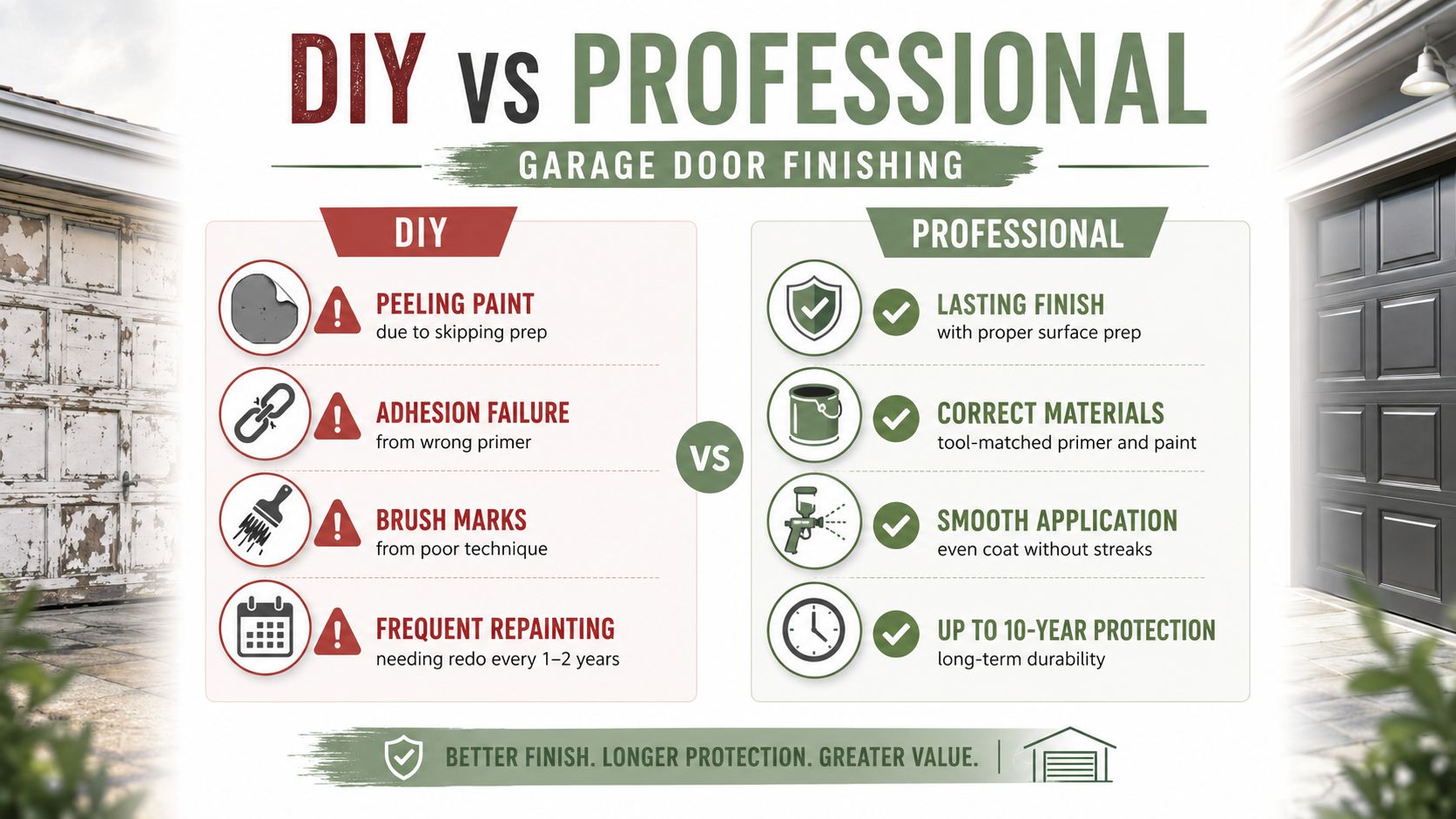
A weekend project often begins with a quick wash and a roller. That may leave chalk, oxidation, grease, or loose edges beneath the new coating. Brush marks become obvious across broad flat panels, while heavy application creates ridges, sags, and uneven sheen around recessed sections.
Where DIY work commonly breaks down
- Inadequate preparation: New paint bonds to residue instead of the door.
- Wrong primer: Standard wall primer lacks the adhesion and corrosion control metal substrates require.
- Poor application: Brushing large panels can leave visible marks and inconsistent film thickness.
- Bad scheduling: Direct sun, high humidity, wind, or extreme heat can interfere with curing.
- Weak masking: Overspray can reach trim, weatherstripping, brick, glass, or the driveway.
A professional matches products and equipment to the door material and existing finish. HVLP spraying can produce a factory-smooth appearance, but the operator must control pressure, overlap, flash time, and the surrounding work area. Drop cloths, plastic containment, and careful masking protect nearby surfaces as much as the sprayer protects the finish.
A contractor also knows when to postpone work. Temperatures above 85°F can cause the surface to skin over before the underlying layer cures. That risk matters in Central Texas, where an exposed panel may become much hotter than the surrounding air. A shaded morning can offer a better application window than a hot afternoon, even when the forecast appears manageable.
The financial case involves more than appearance. A written scope should identify preparation, primer, finish coats, masking, cleanup, and warranty terms. A longer-lasting system may cost more initially, while repeating a failed job adds labor, disruption, and another period of exposure for the door.
Generic promises that professional work lasts 2 to 3 times longer than typical DIY attempts, or protects the door for a fixed number of years, lack context without the product, substrate, exposure, and maintenance history. Ask for an expected service interval based on the actual door, its orientation, and its coating system.
Timeline Costs and Local Service Coverage
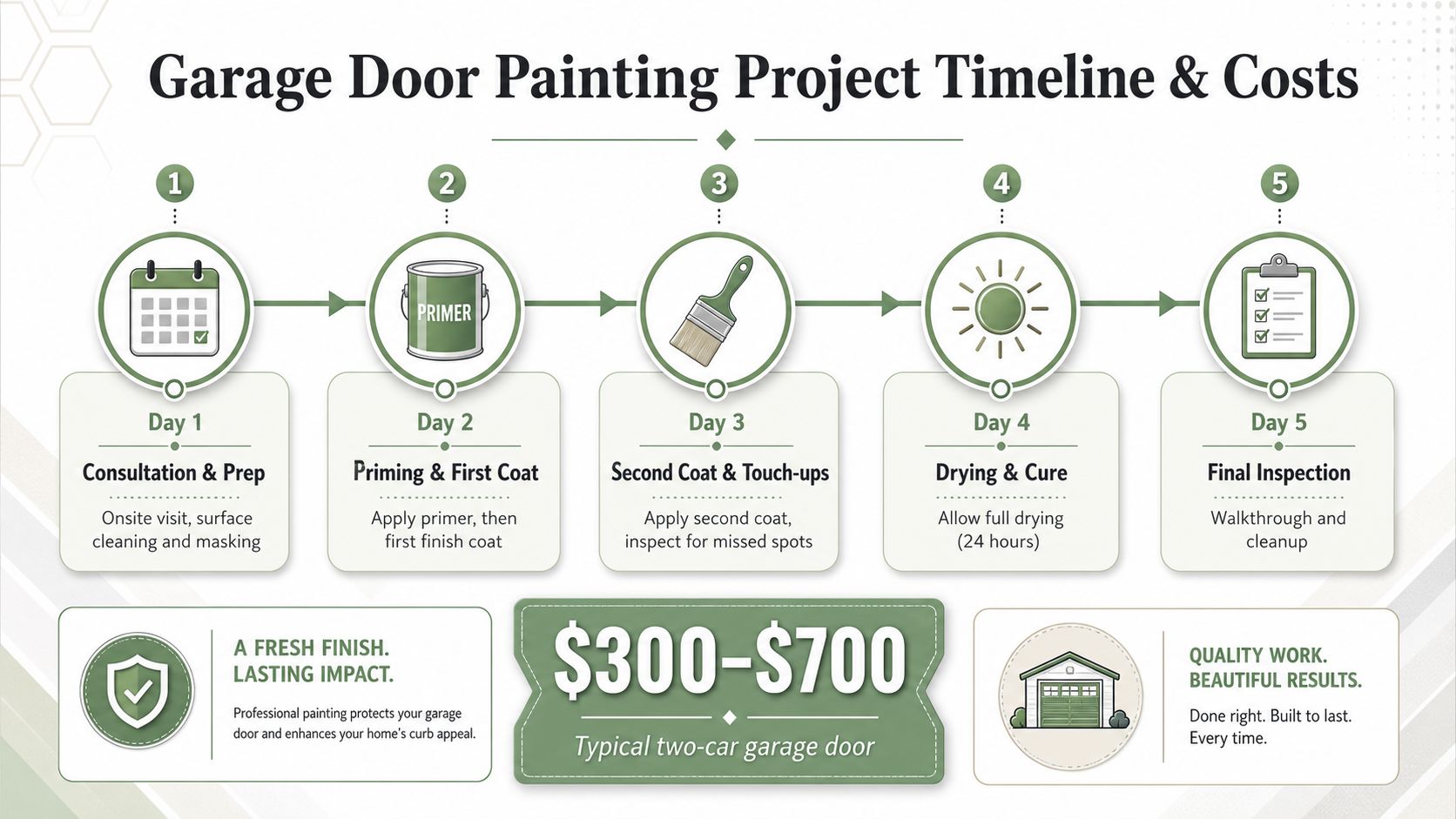
A garage door finishing job requires inspection, preparation, primer, finish coats, drying, and a final review. Crews may complete those steps in a concentrated sequence, but sun, humidity, and storms can shift the schedule. In Austin, a shaded morning or another moderate application window usually gives the coating more control than a hot summer afternoon.
What the estimate should include
- Surface condition: Peeling paint, rust, oxidation, mildew, dents, and wood repairs.
- Material and orientation: Steel, wood, fiberglass, aluminum, or composite, along with the door's sun exposure.
- Finish system: Paint, stain, enamel, or a UV-resistant protective coating selected for the substrate.
- Access and protection: Masking, overspray control, hardware handling, and cleanup.
- Credentials: Proof of insurance, relevant local references, and a written scope of work.
Pricing follows the preparation. A standard two-car door with a stable existing finish takes less labor than weathered wood with intricate details, damaged lower panels, or a major color change. Premium UV-resistant products and specialty coatings can also increase the quote, especially where strong afternoon sun demands better color and film protection.
The supplied project brief references $800 to $1,500 for standard two-car garage doors and $1,500 to $3,000 for custom wood doors. Treat those figures as planning ranges, not universal rates. The associated infographic shows a different typical range, so a project-specific, line-item estimate is more useful than assuming one number fits every property.
Service planning can cover Austin and nearby communities, including Round Rock, Cedar Park, Leander, Lakeway, West Lake Hills, Bee Cave, Georgetown, Hutto, Pflugerville, Buda, Kyle, Dripping Springs, Driftwood, and Steiner Ranch. Cedar Park is roughly 17 to 28 miles from downtown Austin, while Round Rock is about 20 miles, as noted in this Austin-area city comparison. Leander, Hutto, Kyle, and Pflugerville are also commonly included in the Austin metro service area.
Get the start date, weather contingencies, number of coats, curing guidance, and payment terms in writing. The estimate should explain what the contractor will apply and why that system suits the door material and sun exposure.
Restore My Kitchen ATX provides garage door painting and staining with preparation and finish selection suited to Texas sun, heat, humidity, and storms. Visit Restore My Kitchen ATX to request a consultation for your Austin-area garage door and discuss a finish that fits the material, exposure, and appearance you want.