September 2, 2026
Front Door Glass Repair Near Me: An Austin Homeowner's Guide

You've just found a crack spreading across the glass in your front door, and the timing couldn't be worse. It may be evening in Austin, the air conditioner may be pushing through the opening, and you may be wondering whether the door is secure enough to leave until morning. Searching for front door glass repair near me is easy. Choosing the right service is harder, because a damaged lite may need a glass repair, an insert replacement, or an entirely new door.
The smart choice depends on what failed, how exposed the opening is, and whether the frame and slab remain sound. Here's how I'd assess that problem at a Central Texas home before recommending anyone spend money.
Table of Contents
- When the Glass in Your Front Door Breaks in Austin
- Repair, Insert Replacement, or Full Door Replacement
- Emergency Same-Day Service vs Scheduled Repair Visits
- What Front Door Glass Repair Actually Costs Around Austin
- How to Vet a Local Front Door Glass Repair Pro
- Why Austin Weather Decides Which Repair You Need
- Coverage Across the Austin Metro and How to Call Right
- Your Decision Checklist Before You Pick Up the Phone
When the Glass in Your Front Door Breaks in Austin
At 7 p.m. in a Hyde Park bungalow, a homeowner comes home and sees a crack running across the half-lite. A child's soccer ball caused it. The air conditioner is pushing cool air through the gap, and a neighbor walking past has already noticed the damage.
The first questions usually come fast. Can the door still lock tonight? Will homeowners insurance care? Can a glass technician reach the house quickly through Austin traffic? Those questions matter, but the first decision is more basic: is the opening stable, weather-tight, and safe to touch?
If glass is loose, actively shedding fragments, or leaving the lock and interior exposed, keep people and pets away from the door. Don't press on the damaged panel, sweep fragments with bare hands, or keep opening and closing the slab. A temporary board-up or carefully secured covering may be appropriate until a qualified technician arrives.
Practical rule: If the door can't protect the home from weather, pets, or unwanted entry, treat it as an emergency. If the glass is merely fogged or has a stable hairline crack, schedule the repair instead of paying for priority dispatch.
The Austin homeowner in this example still has three possible paths. A technician might repair a limited single-pane defect, replace the insulated or decorative insert, or recommend a new door if the slab, jamb, or glass housing has failed. The cracked pane alone doesn't decide the scope.
Home and architectural glass injuries are heavily concentrated in residential settings. An Australian surveillance summary reported that 86% of child injuries and 68% of adult injuries occurred at home, while glass doors were involved in 41% of child cases and 22% of adult cases. Children most often struck doors while running or walking into them, while adults were more often hurt by tripping or slipping through them, according to the Australian glass injury surveillance summary.
That's why the repair needs to restore more than appearance. The replacement must fit the opening, preserve the door's operation, and use appropriate safety glazing. The following decisions answer what to do tonight and what to ask for when the technician arrives.
Repair, Insert Replacement, or Full Door Replacement
Start by treating the door like a system with separate parts. The glass lite, the surrounding stops or frame, and the door slab can each fail independently. Replacing the whole door because one sealed unit fogged is usually wasteful. Repairing only the pane when the slab is split is false economy.
Glass-only repair
Glass-only work suits a sound door with limited damage. A single-pane chip, a small surface defect, or a repairable crack may allow a technician to use resin or remove and replace one pane. This is the glass equivalent of replacing one cracked tile instead of rebuilding the wall behind it.
That option doesn't apply to every crack. Spider-web shattering, loose fragments, or a pane that no longer sits securely usually calls for replacement rather than a cosmetic repair. Entry-door glazing also falls within human-impact safety concerns. The National Association of Certified Home Inspectors' safety-glass guidance explains that the International Residential Code framework requires safety glass in locations subject to human impact.
Insert replacement
Insert replacement is the correct middle path for most failed insulated or decorative door glass. The technician removes the damaged insulated glass unit, often called an IGU, or the decorative lite, then installs a factory-built replacement matched to the opening and door system.
A permanent milky film or fog between panes isn't dirt on the surface. It indicates that the insulated-glass seal has failed, allowing moisture into the cavity. Industry guidance identifies several possible failure causes, including excessive edge pressure, air pockets in sealant, poor corner fill, spacer misalignment, exposed desiccant, poor sealant mixing, and damaged low-E coatings. Once the seal fails, the insulating glass failure guidance supports replacing the unit rather than trying to clean between the panes.
This approach preserves the slab and frame when both remain sound. It's also the sensible answer for fogging, shattered dual-pane glass, or water-stained decorative inserts. For a wood door that needs cosmetic restoration after the glass work, keep refinishing separate from the glazing decision. A specialist in front door refinishing can address the finish without turning a glass problem into a full replacement.
Full door replacement
Replace the entire door only when the surrounding structure has failed. Typical triggers include a rotted wood jamb, a split slab, a badly distorted opening, or a discontinued door skin with no compatible insert available.
A water-stained oak panel doesn't automatically mean the door is finished. Check whether the damage is limited to the finish, stops, or insert housing. Full replacement makes sense when the door can no longer hold hardware, weatherstripping, or glazing securely.
Emergency Same-Day Service vs Scheduled Repair Visits
A broken front-door lite needs a timing decision before it needs a price quote. Same-day service makes sense when the opening threatens security, safety, or the house itself. It costs more, so do not pay the premium for damage that can remain stable until a scheduled visit.
Request priority dispatch when fragments are falling, the opening exposes the lock or interior, pets can escape, or severe weather is moving in. A hail-damaged door during an active storm period needs quick stabilization, especially when rain is entering around the lite. The first visit may secure and cover the opening, with the correctly matched insert installed after measurements and ordering.
After-hours work can add roughly 50% to 100% to the base price, according to an emergency glass-door repair information guide. That premium is reasonable when waiting leaves the home exposed. It rarely makes sense for a fogged unit that has been failing gradually.
Pay for urgency when the opening is vulnerable
Call for emergency help if:
- The glass is actively breaking: Loose or falling fragments can injure anyone entering or leaving.
- The door won't secure: A damaged lock area or exposed opening turns a glass problem into a security problem.
- Weather is entering: Rain, wind, or storm debris can damage flooring, trim, and the door's interior finish.
- The home has pets or young children: An unstable lite creates a preventable hazard.
Schedule when the door can safely wait
A stable hairline crack, permanent fogging, or planned decorative upgrade can usually wait for a normal appointment. Scheduling gives the technician time to identify the door brand, measure the insert, order matching textured glass, and specify a compatible low-E or safety-glazed unit instead of installing whatever happens to be available in the truck.
Ask what the first visit includes. It may be emergency stabilization, a measurement appointment, or a complete replacement. That distinction matters in Austin, where a technician may secure the opening the same day but need a later visit for a custom insert. Use scheduled service when the door still closes, locks, and keeps weather outside. Use priority service when those protections have failed.
What Front Door Glass Repair Actually Costs Around Austin
A broken front-door lite does not have one reliable “average” price. The first question is which job the technician is quoting: glass-only repair, insert replacement, or full door replacement. Those options involve different materials, labor, and time at the home.
Broad consumer guidance places front-entry repair at approximately $350 to $1,050, door-window repair alone at $75 to $300, and front-door glass replacement at $150 to $600 for the glass piece itself, according to HomeAdvisor's door repair cost information. Use those figures as general reference points, not as an Austin bid. Decorative glass, insulated units, difficult access, and a damaged frame can change the final amount.
| Service Option | Typical Austin Range | After-Hours/Hail Premium | Typical Time on Site |
|---|---|---|---|
| Glass-only repair | Varies by damage and access | Priority labor and trip charges may apply | Often a short service visit |
| Insert replacement | Commonly falls within the broader $150 to $600 glass-piece range, before the complete job is scoped | Emergency work can add roughly 50% to 100% to the base price | Usually longer than a surface repair because the unit must be removed and re-glazed |
| Full door replacement | Can reach $1,000 or more when the slab, frame, finish, or hardware also requires work | Storm demand and expedited ordering can increase the total | Requires removal, installation, alignment, sealing, and cleanup |
The table only frames the decision. A measured quote must show whether the existing insert can come out cleanly, whether the frame is straight and dry, and whether the slab or hardware also needs work. A full front-entry repair may average $350 to $1,050, while a complete replacement can cost much more once the door slab or frame is compromised.
Read the quote line by line
Your estimate should identify:
- Glass specification: State whether the unit is tempered, laminated, insulated, decorative, or low-E.
- Labor and trip fee: Reject a vague “service charge” with no explanation.
- Sealants and glazing materials: The installer should name the products used to seat and weather-seal the unit.
- Debris removal: Confirm who removes broken glass and packaging.
- Tax and permit handling: Full door replacement may involve requirements that do not apply to a glass-only swap.
Matching decorative caming, custom-shaped glass, and frame repair can raise the total. A full-frame rebuild is a poor recommendation when the insert housing remains straight, dry, and structurally sound. Ask the technician to show you the failed component and explain why the proposed scope addresses it.
How to Vet a Local Front Door Glass Repair Pro
The best vetting happens before the van arrives. A company that can explain the existing glass, document insurance, and provide a written scope is more useful than a contractor who just says, “I can replace that.”
Verify the business before scheduling
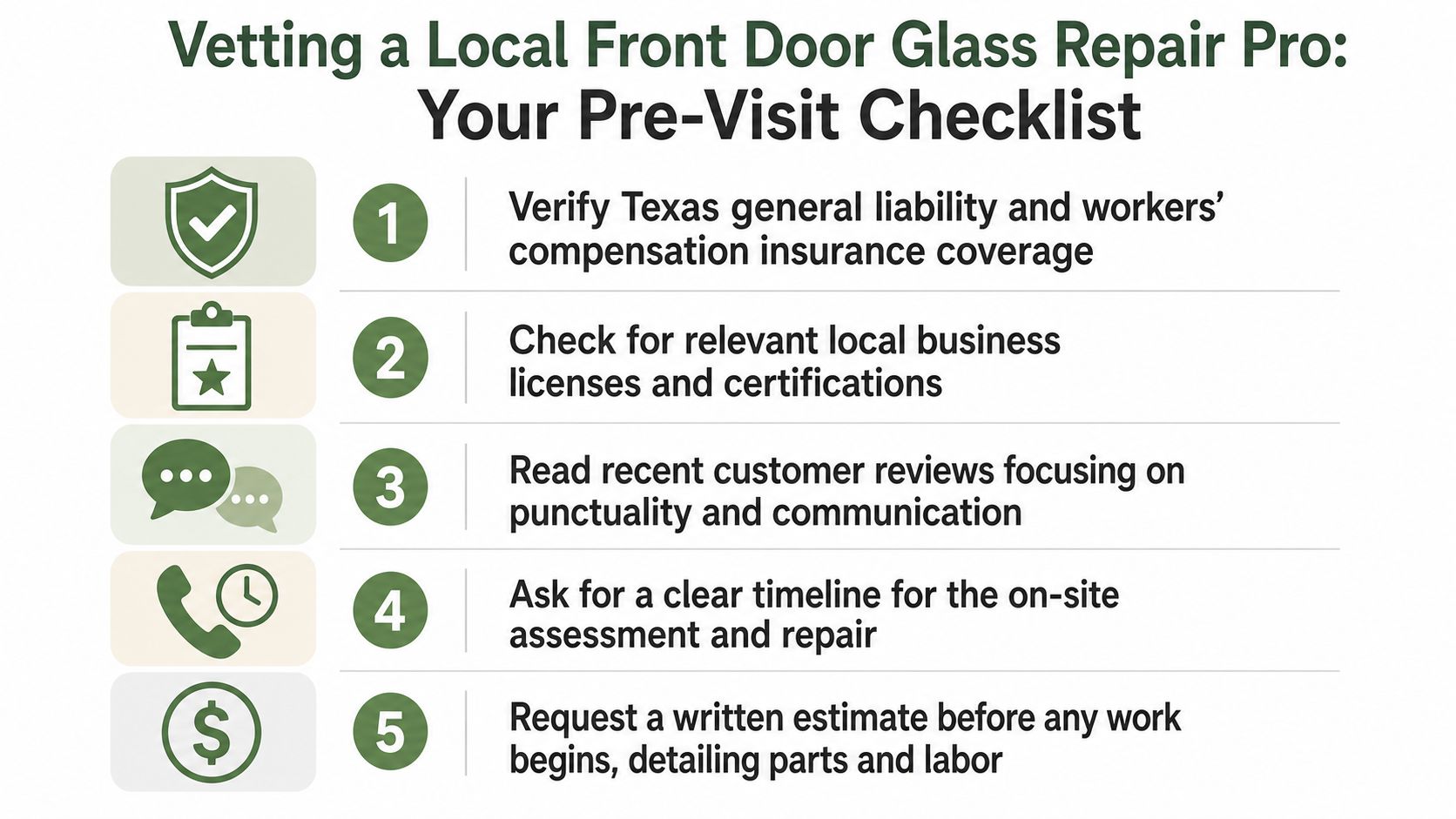
Ask for Texas general liability insurance and workers' compensation coverage. A glass-and-glaze registration alone doesn't tell you whether the company carries the protection needed for a crew working at your home. Ask that the certificate holder and insured name match the company's legal business name.
Confirm an Austin or Travis County business address. Read recent Google and Yelp reviews for repeated complaints about missed appointments, leaking seals, poor cleanup, or callbacks. Check the Better Business Bureau for unresolved complaints, but don't treat any single review as decisive. Look for patterns.
Demand a written scope
The estimate should name the glass type, insert manufacturer when applicable, labor, sealant, and warranty term. Ask whether the warranty covers seal failure, installation, and labor, or only breakage of the glass itself.
A credible technician should be able to tell you whether the existing lite is tempered, insulated, laminated, low-E, or decorative. They should also explain how they'll identify the replacement when the door brand label is missing.
Red flags include:
- Cash-only discounts: A discount tied to avoiding normal paperwork is a poor trade.
- Verbal-only pricing: You need the scope and exclusions in writing.
- Permit refusal: A contractor who won't address permits for full door replacement may be avoiding responsibility.
- Unclear glass identification: If the person can't distinguish tempered glass from an insulated unit, don't let them order the replacement.
- Pressure to replace the whole door: Ask why an insert swap won't solve the problem.
Three questions separate a glass specialist from a handyman with a caulk gun: What exactly failed? What safety-glazing specification will you install? What does the warranty cover if the insulated unit fogs again?
Why Austin Weather Decides Which Repair You Need
A front door facing Austin's afternoon sun can develop a different failure than one sheltered beneath a porch. Heat, humidity, ultraviolet exposure, and storm-driven moisture affect the glass unit, frame, finish, and seals together. The repair choice must account for that exposure, not just the visible crack or fogging.
Wood doors need particular attention. Sunlight degrades exterior stain and finish, while temperature swings drive movement between the door, insert, and surrounding materials. Failed finish or sealant lets moisture reach the wood, where swelling can interfere with the insert and weatherstripping. Inspect the finish regularly and ask whether the door needs recoating before the glass work is completed. This guidance on protecting finishes from Texas humidity explains why moisture control matters for exterior wood.
Match the insert to the exposure
A fogged insulated lite requires more than a visual match. Ask the technician to identify the spacer, edge-seal system, glass thickness, and low-E specification. A suitable low-E coating can reduce solar heat gain, while the right spacer and seal design support better perimeter performance. If a storm door sits close to the front door, have the installer check for trapped heat between the two panels.
Choose safety glass according to the door's approved configuration. Tempered glass is intended for human-impact locations and breaks into smaller pieces when it fails. Laminated glass stays bonded to an interlayer after breakage, providing a different safety and security profile. The door design, applicable code requirements, and manufacturer specifications determine which option belongs in the opening.
A cheap insert is expensive if it fails twice. Ask what caused the original failure and whether the proposed replacement addresses that cause.
Hail and storms can damage stops, decorative parts, edges, and seals even when the glass break looks minor. For doors exposed to strong afternoon sun or severe weather, require an inspection of the perimeter, sill, finish, and weatherstripping alongside the glass. For a protected entry, an insert replacement may be enough. For swollen wood, failed seals, or repeated movement, full door replacement can be the better repair.
Coverage Across the Austin Metro and How to Call Right
“Same day” doesn't mean every part of Greater Austin receives the same response. Dispatch time depends on crew location, traffic, glass availability, and whether the technician must measure before ordering a replacement.
Core Austin areas, including ZIP codes 78701 through 78759, may receive faster service than outlying communities. Round Rock, Cedar Park, Pflugerville, Bee Cave, Lakeway, and Kyle are commonly treated as practical Austin-metro targets, while Hutto, Leander, Dripping Springs, and nearby communities may require more scheduling flexibility. Greater Austin also includes or is associated with Buda, West Lake Hills, Georgetown, and Steiner Ranch, as reflected in the Greater Austin regional overview.
| City / Area | Typical Same-Day Response | After-Hours Availability | Notes |
|---|---|---|---|
| Austin core | Depends on crew and glass availability | Limited and provider-specific | Give the ZIP code first |
| Round Rock, Cedar Park, Pflugerville | Depends on route and workload | May require priority dispatch | Ask whether the part is stocked |
| Bee Cave, Lakeway, West Lake Hills | Depends on crew location | Often narrower after hours | Direct sun exposure is useful to mention |
| Buda, Kyle, Georgetown, Hutto | May require route coordination | Provider-specific | Send photos before booking |
| Leander, Dripping Springs, Driftwood, Steiner Ranch | Scheduling can be more flexible than immediate dispatch | Often limited | Confirm travel and trip charges |
When you call, lead with the door material, approximate lite size, and condition of the opening. Say whether the glass is still weather-tight, actively leaking air, shedding fragments, or merely fogged. Have your address, a clear photo, the visible door brand, and proof of homeownership or renter authorization ready.
Mention pets, gate codes, and whether the door receives direct afternoon sun. Those details affect access, safety, and the replacement specification. If you want a local consultation, use the Austin-area contact page and provide the same information before the appointment is arranged.
Your Decision Checklist Before You Pick Up the Phone
A good call starts with a useful description. Don't just say, “My front door glass is broken.” Identify the failure, the urgency, and the part you want priced.
Classify the damage. Is it a hairline crack, a single-pane chip, a shattered lite with an intact frame, or damage that includes the slab, stiles, jamb, or weatherstrip? A stable single-pane defect may support glass-only work. A failed insulated unit generally needs an insert replacement. A compromised slab may require a full door quote.
Decide whether the opening is exposed. If weather, pests, pets, or unwanted entry can reach the home, request stabilization or emergency service. If the door still closes, locks, and keeps out weather, a scheduled appointment can give the technician time to source the correct unit.
Gather measurements and identification. Photograph the entire door and the damaged lite. Add a close-up of any brand marking, grille, decorative pattern, or spacer. Measure the visible opening if you can do so safely, but don't remove stops or handle broken glass.
Verify the contractor. Confirm Texas liability insurance, workers' compensation coverage for crew members, and a physical Austin-area business address. Ask who will perform the work and whether the company specializes in door glazing rather than only general handyman repairs.
Request a written scope. The quote should name the labor, glass type, insert or manufacturer, sealant, debris handling, warranty term, and any trip or emergency charge. The warranty should be expressed in a clear term, not as “guaranteed for a long time.”
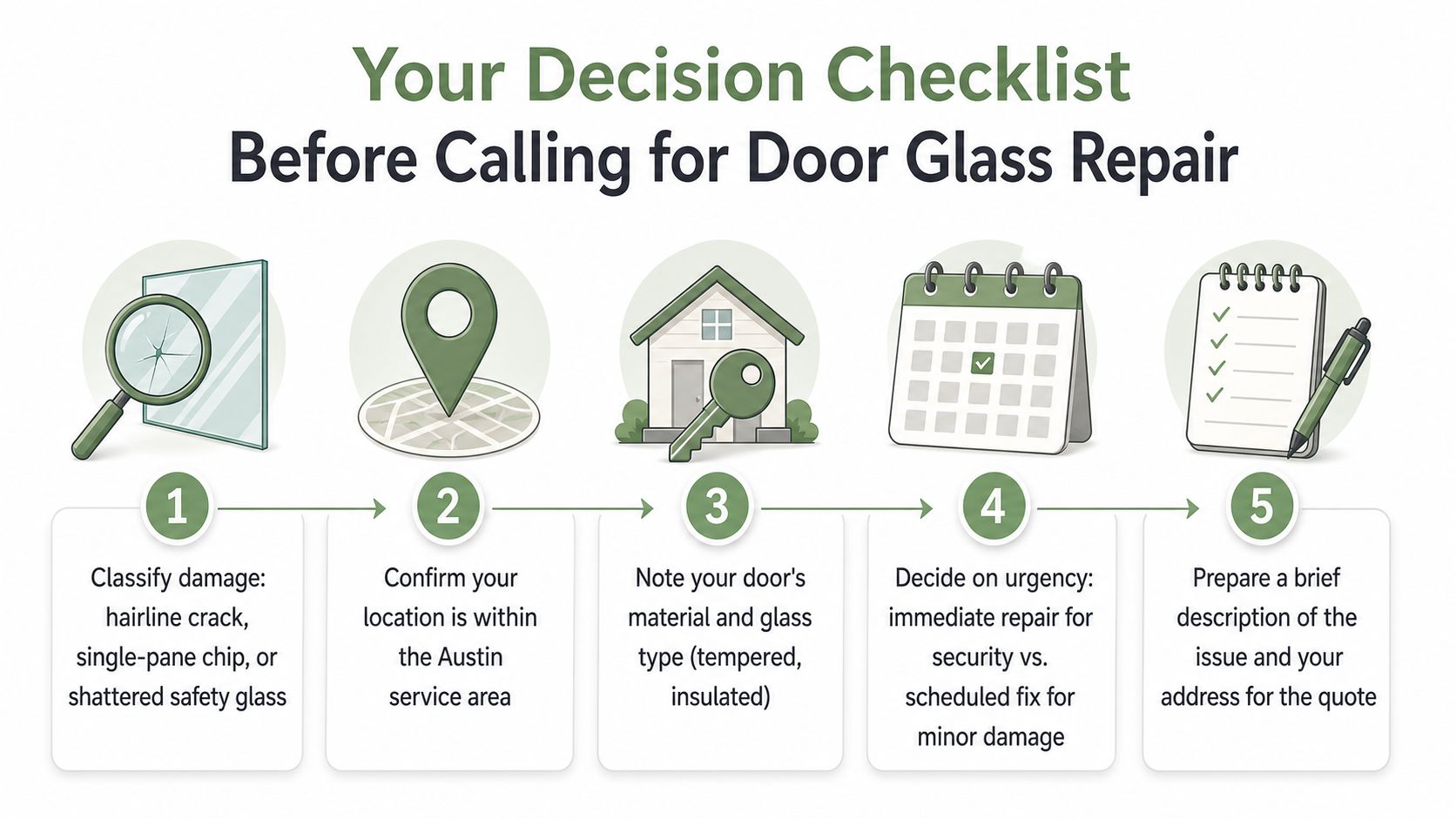
Use those five answers to compare quotes intelligently. You'll know whether you're asking for a glass repair, a matched insert, or a full door assessment, and you'll be less likely to accept a low initial price that omits the parts and labor needed to finish the job.
Restore My Kitchen ATX helps Austin-area homeowners with front door refinishing and exterior wood restoration, including sun-faded and weathered entry doors. If your glass issue also involves a damaged finish or you need a clear project scope, visit Restore My Kitchen ATX to request a consultation.